
While diversity among attorneys is widening in Washington state overall, political polarization hampers representation in smaller cities and rural areas.
Rajeev Majumdar didn’t know a soul when he moved to Blaine 16 years ago. But he quickly found a number of unexpected connections as a lawyer practicing in the small border town.
“Just by being a person of color, for example, or having a name that doesn’t resonate with the majority of the population, so much work came out of the woodwork for me,” said Majumdar, who is now managing partner of the Whatcom Law Group. “Chinese people, Persians, Mexicans — people I have no real connection to except that they think that I might understand their story better.”
Majumdar, who made history as the first Washington state bar president of South Asian descent in 2019, is among a growingly diverse population of lawyers who are shifting the demographics of Washington’s legal community.
In fact, a new study by the Washington State Bar Association suggests that the state’s legal community is edging towards becoming more reflective of the state’s population.
The study found that between 2012 and 2024, the percentage of female, LGBTQ+ and disabled survey respondents increased as did the percentage of those reporting a race other than white all increased. The percentage of female respondents, for example, went from 38% in 2012 to 44% in 2024.
Meanwhile, the number of survey respondents who identified as LGBTQ+ increased by 3% and the number who reported being disabled increased by 2%. The number of respondents who reported a race other than white also increased by 6%.
Less diverse outside larger cities
But local legal professionals have mixed feedback on whether those statewide changes are mirrored in their communities.
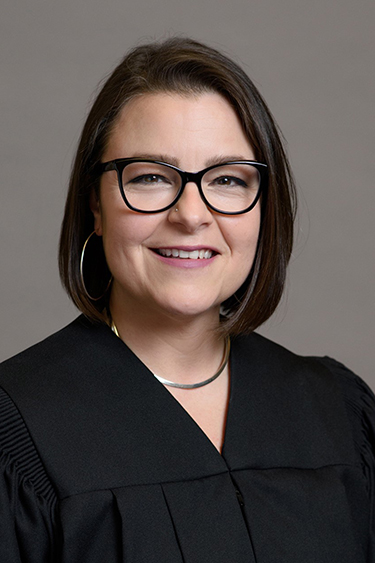
“I think it really depends on where you are in terms of how noticeable it is,” Washington state Court of Appeals Judge Cecily C. Hazelrigg said. “If we’re talking ethnic diversity — I think you’re more likely to see it in larger metropolitan areas.” Hazelrigg grew up on Whidbey Island and attended Skagit Valley College and Western Washington University before going to law school.
Majumdar said he’s seen the legal community in Whatcom County become less diverse over the last decade and a half even though the number of lawyers in the county has increased.
“I’ve found it increasingly hard to attract young lawyers out of the city, especially lawyers of color because of the way our country is polarizing. They’re really starting to see rural areas as less diverse than they actually are and therefore scarier than they actually are,” he said. “It’s just going to make it harder and harder for rural areas to have more diverse representation. And the problem is that there’s lots of diversity out here.”
For Alejandra Cabrales, however, practicing in a small town has been advantageous both professionally and personally. Cabrales, a Hispanic lawyer who was previously a paralegal in Mount Vernon, is almost 1.5 years into her career as an associate attorney at Whatcom Law Group.
“I knew I didn’t want to go into big law, I guess was my main thing. I wanted something where I could have an equal work-life balance. And I knew going to a smaller town is where I would probably achieve that better than, say, going to Seattle,” she said. “Although some people may think smaller towns may be conservative … you find your communities.”
She said she’s seen more attorneys of color in Skagit and Whatcom counties than in her native Grays Harbor County, although she does still wish there were more attorneys of color in the area, particularly younger ones.
“It’s very hard sometimes to find someone I can talk to and relate to and talk about cultural things that are happening,” she said. “So that’s been a little bit challenging, and honestly, I will say, a little surprising for Whatcom County because I would assume that there would be a little bit more people my age who are of similar background.”
Betsy Brinson began her law career when only 8% of American lawyers were women. Yet she says she never felt the gender divide after moving back to her native Bellingham to practice law in the early ’90s.
“My law school was extremely proud of the fact that one-third of my entering class was women. So that gives you an indication of what the ratios were back at that point in time,” said Brinson, who graduated from law school in 1981. “I felt the gender issue more strongly in the larger areas where I practiced than I did in Whatcom County. And I think part of that was because I was born and raised here. … So I’ve never really felt like I didn’t belong.”
Room for improvement
There is still progress to be made, according to the study and local legal professionals.
The study highlights that white legal professionals in Washington are overrepresented by 17% compared to state census data and by 21% compared to American Bar Association law school graduate data.
That lack of diversity also exacerbates professional barriers and personal issues for legal professionals from underrepresented communities, the study found. For example, white survey respondents were far less likely to report being frequently mistaken for a non-lawyer in work settings or being criticized for not trying to fit in.
“Boy, is that something that resonated,” Hazelrigg said, adding that, as a lawyer, she was often mistaken for an interpreter when speaking to clients in Spanish.
“Is that premised in some way on the notion that women, in particular, who are speaking a language other than English can only serve in the courtroom in that capacity? Maybe — because I’ve had that same experience as a judge where I’ve gone to events and people have said, ‘Oh, are you an attorney at the court or a law clerk?’ ” she added. “I think it’s rooted in kind of these baked-in ideas about what a judge looks like.”
Cabrales said she hasn’t had any negative issues within the legal profession but that clients and prospective clients don’t always take her as seriously as a young, female lawyer of color.
“I think it’s just their bias, right? Some of them are older, gentlemen who maybe don’t want a young female attorney of color to represent them,” she said. “And I don’t take offense to that, but I have seen that more with clients or consults that I do but not necessarily within my colleagues.”
She also said Skagit County has yet to have a judge of color on the local bench. When she worked as a public defender for Skagit County, she said she was one of two people of color in an office of about two dozen lawyers.
Hazelrigg and Majumdar agreed that ongoing education and dialogue about the topic of diversity can help ensure that the legal field, individual firms and courts are more inclusive.
“Educating all of us in the Washington State Bar Association is the first step. Let’s get on the same page,” he said, expressing excitement that the association did the study. “You can’t argue with quantification. It’s no longer my personal experience. It’s no longer, ‘Yeah but I know X, Y and Z and they had a wonderful experience’.”
The findings do offer some hope. The study found that women and bar members of color have been in the legal profession for less time than their white, male colleagues, suggesting that diversity may increase in the future.
“Diversity may increase over time if equity and inclusion efforts are made so underrepresented groups stay and thrive in the profession,” the study states.
Reaching down
How else does the local legal community become more diverse? Mentorship may be part of the answer.
Both Hazelrigg and Majumdar, both first-generation lawyers, said finding mentors was a key part of their success stories.
“Going into law, I didn’t have a lot of community going in — ethnicity-wise, race-wise. I’m a religious minority,” he said. “I didn’t really have any pathway of institutionalized connection. … Those of us who have become lawyers, I think it’s incumbent upon us and important to reach a hand down and try to make pathways upward.”
Majumdar said a program with the South Asian Bar Association of Washington State was key in connecting him with mentors. He encouraged students and prospective lawyers to take advantage of the myriad of different identity bar associations in the state and reach out to established lawyers — though he also said the field needs to adapt to the needs of younger generations.
“If we want to become more welcoming to a younger, diverse, different population, we also have to meet them where they are in the sense that they do operate differently, so they do have different expectations,” he said.
Hazelrigg had a similar experience after attending a paralegal program at Skagit Valley College and seeking out a series of good mentors that pushed her along the path to a law degree.
“By the time I got to law school, I knew that the statistics about Latinos in higher ed were stark, and I knew that the further I went, the fewer there were going to be,” she said, adding that mentorship helped make the difference.
“Having somebody who has come from a similar background has a huge impact on where you see yourself, right? If you don’t see anybody who looks like you or who comes from those backgrounds, it can be hard to see those places as viable professional possibilities for yourself,” she continued. “And we see that across gender lines. We see that in terms of disability, we see that in terms of queer identities and first-gen and socioeconomic aspects of culture. It’s a big deal.”
Although that representation is impactful to those in the legal profession, Majumdar stressed that it’s also important to the general public whose lives are impacted by the legal system.
“How do we make decisions that are representative and meet the needs of the population if the population in general isn’t represented in those systems?” he asked.
— By Sydnee Chapman