
Whether through song, paint or writing, local artists are using their art to navigate identity, history and the shifting society around them
The Trump administration’s push against diversity, equity and inclusion initiatives has forced many marginalized communities to wrestle with the erasure of hard-fought progress. In the face of this, some have turned to art as both a sanctuary and a weapon, creating works that speak to their roots, their pain and their hope.
Under the intentional, surrealist strokes of Zion Georges’ brush, faces emerge: ones that are bold and unapologetically Black. The Bellingham-based artist, who grew up in Anacortes and was born in Haiti, blends their identity and struggle onto each canvas.
“Being Black, the faces of my siblings were always interesting to me,” Georges said. “None of us were related, so we all looked really different, and I’ve always been so fascinated with stories and faces … I had always wanted to depict human beings in some (artful) way.”
Their work often depicts the tension between outside perception and self-identity, a feeling Georges said is all too familiar as a Black person. “I think as Black people we experience dissonance every day of who we believe we are and how we’re treated.”
A perfect reflection
Georges also detailed their struggles with housing insecurity, another theme depicted in their art.
“I think there’s a different kind of isolation and bias toward you when struggling with housing insecurity,” Georges said. “Art was a perfect reflection for how confusing it all was … Some of my art is muddy, green and yellow. They’re a physical embodiment of disgust and the guilt for not being able to take care of yourself in the way that you want to be.”
When painting, Georges plays the same song on repeat, one that preserves the emotion they’re feeling in the moment. From there, bright, saturated colors burst from their canvases, with lips, noses and other attributes displayed with exaggerated proportions. Usually, their paintings are done within a few hours, many representing a push back against a government that, they said, continues to criminalize Black features, reinforcing harmful stereotypes and systemic oppression.
“I was taught art by white men,” Georges said. “When I started making faces, they looked like white people. Now, I made it very important that the faces (I paint) look Black or look like me … They’re bold, colorful and have depth. That’s not something I was always able to have growing up with my self-identity.”
Georges said they hope that in the future, others will recognize the value of Black artists’ work and understand that creative expression is not just art; it’s an act of resistance, and a declaration of who Black people are and what they’re worth.
Healing through words
Robert Lashley’s novels read like a symphony of survival: raw, unflinching and deeply tied to his roots in Tacoma. With a literary lineage inspired by the Harlem Renaissance and modernist traditions, Lashley writes not for the white gaze but for his community, his ancestors and the grandmother who gave him a stable home.
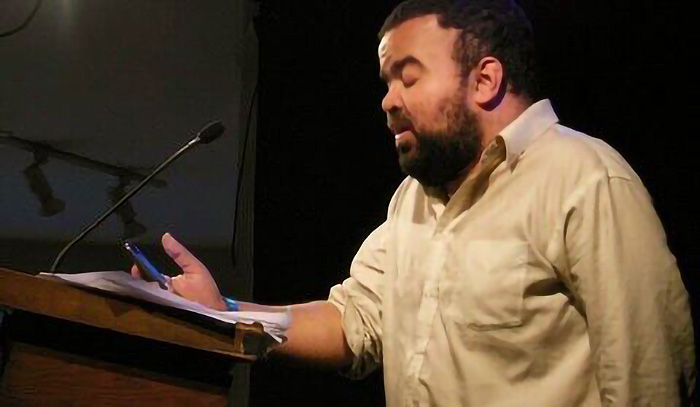
“There’s no other place that makes sense to me more than my grandmother’s house,” Lashley said. His grandmother, born in 1920 Alabama on a plantation, moved to Washington after serving in the military — a journey made possible by his aunts, who scraped together money to move her from work camps in the South.
It was storytelling that steadied Lashley when his grandmother died. “Cultural rituals that Black folk have to survive gave me a ground to go back to when the world didn’t make sense,” he said.
Despite his success as an author and poet in the Pacific Northwest, with popular books “The Homeboy Songs” and “Up South,” Lashley has faced pressure to adjust his work to fit a more “palatable” narrative.
“One of the most controversial things about me, and one that I could not care less about, is that the biggest complaint I have from white writers in Bellingham and Seattle is that they don’t get my references,” Lashley said. “I was one of the first major poets to tell the white gaze to go to hell … People thought that I was a little too ghetto, and my references were too ghetto. They wanted someone more ‘polished’ for an upper-class audience.”
His art remains unwavering, a complex truth for those willing to listen.
“My role, right now, is to … embody the best elements of my culture, because I think that organizations and institutions have failed miserably,” Lashley said. “The thing with Donald Trump’s election that affected me most was seeing my loved ones and friends ending up broken … I want to be there for them, write and let them know that their lives are worth it.”
Music, for unity and positivity
For Clinton Fearon, music has always been a path to peace. Born and raised in Jamaica, his songs are familiar with the rhythm of resilience. Fearon started playing the bass and singing with his group, The Gladiators, and spent 18 years with them before moving to Seattle in 1987. He is now the founder of the Boogie Brown Band and has spent decades channeling struggle into sound, created with his unshakable belief in love and unity.
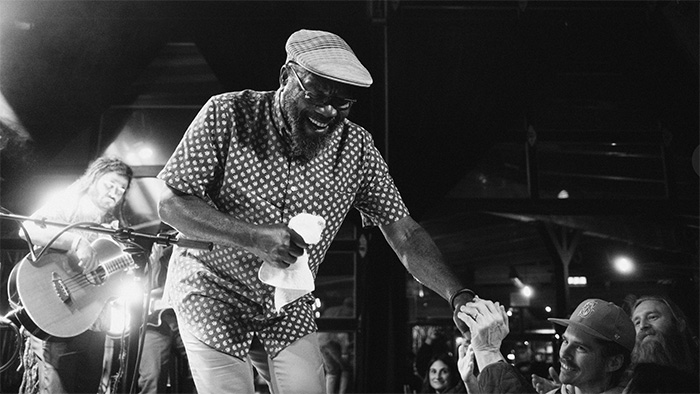
“We’ve been watching things breaking apart for all of my years growing up. Politics are politics,” Fearon said. “We have to, as people, lean on one another … Don’t depend on the government to fix our situation. We have to find a way to do what we love and love what we do.”
For as long as he can remember, Fearon’s been in love with music — once crafting guitars from bamboo, turning natural materials into instruments and weaving melodies from the world around him — rooted in transforming pain into positivity.
Even now, at 74 years old, his creative process remains the same. Fearon often reflects on his Jamaican roots, acknowledging that, while he’s not from the U.S., he’s here just like many others who have come from different places, emphasizing the reminder that we’re not as different as we might seem.
“The time people come together is when there’s a big disaster. Then there’s solidarity, until weeks later, we stand alone again,” he said. “I still have faith in mankind. I think we can overcome any obstacles, and good overcomes bad.”
— By Neisha Gaskins
Also read in Salish Current:
• “Why losing Roberta Flack hit so hard during Black History Month,” Feb. 28, 2025
• “Transformative power of uplifting diversity is at work in Whatcom,” June 10, 2022
• “‘Of Blood and Sweat’ traces role of Black labor in building white wealth and power,” April 12, 2022
• “Local Juneteenth event celebrates diversity, freedom, challenge,” June 21, 2021