
Jennifer Hahn shares recipes and lessons from Pacific Coast adventures
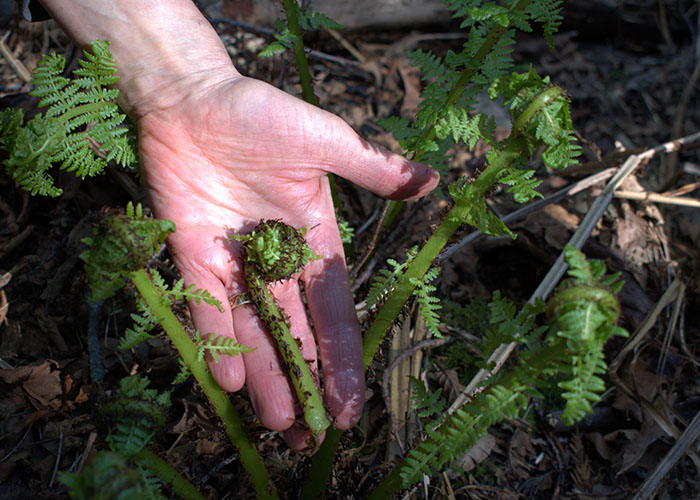
Jennifer Hahn showed up at Western Washington University from Wisconsin in 1978, an ardent outdoorswoman planning to become an environmental lawyer. When Rand Jack, her environmental law professor at Fairhaven, suggested, forcefully, that she was not likely to be happy either in law school or after, she questioned her decision. When two other profs told her basically the same thing, she shifted her focus.
Forty years into her life’s work as an outdoor guide, kayak adventurer, wild foods forager and writer, she is still grateful to those profs.
Hahn will share from her newest book, “Pacific Harvest: A Northwest Coast Foraging Guide,” at Village Books in Fairhaven at 6 p.m, May 2.
At Western, Hahn took journalism classes along with her scientific education at then-Huxley College — since renamed College of the Environment. She studied with famed nature writer Annie Dillard, took a turn as editor of Klipsun Magazine in the journalism department and in between set out on foot and by boat to explore as much of the region as possible.
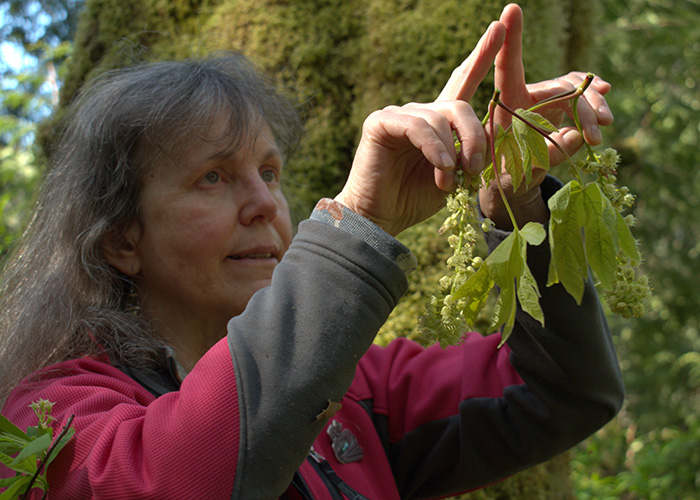
In 1983 she and four friends spent a month sailing up the east side of Vancouver Island in a 19-foot homemade trimaran. By design, they brought along only some basic food supplies and a stash of emergency meals. They supplemented these rations by foraging along the way. Hahn said at the end of the trip they were skinny, and they were also feeling more connected to the land and the fellow foragers, both human and creature, around them.
Touring, teaching, tasting
By 1990 she was running her own kayak tour guide business, Elakah!, which took paddlers both novice and experienced out into the Salish Sea in summer and the Mexican west coast in winter. The local trips often included a stop by a kelp bed to gather sections of its tubular stipes to go into a beachside stew.
In 1992, with years of wilderness expertise to draw on, she set out from Ketchikan in a piece-by-piece solo journey by kayak down the Inside Passage back to Bellingham. The 750 miles took 70 days. The time had to be prized out from her guiding business and worked around a case of tendonitis that threatened to take her out of the kayaking life entirely.
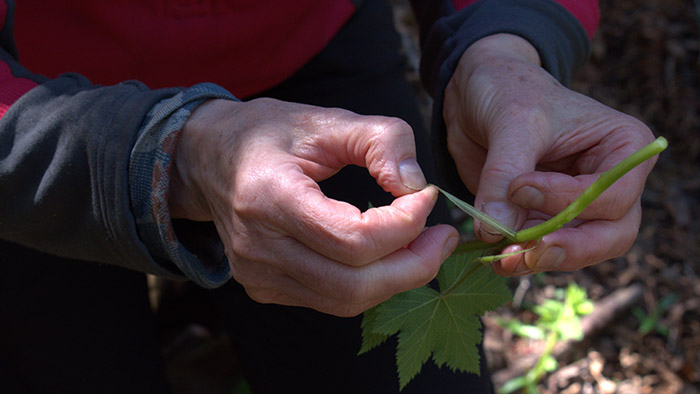
Two springs and two summers between 1992 and 1996, with a long hiatus in the middle to give her forearms time to heal, became the basis for her first book, “Spirited Waters,” published in 2001 by Mountaineers Books. An accomplished illustrator of plants and animals, Hahn also did the drawings for the book. And she ate: “I took my seat at the intertidal table,” she wrote. “Plucking mussels from white-whiskered headlands where waves soaked my sleeves, I felt a kind of belonging — belonging not just to my appetite, but to the tide, moon and booming waves. The boundaries separating us fell away like scales.”
Like paddling and sketching, foraging wild foods became a way for Hahn to dissolve those boundaries that so easily separate humans from the rest of the natural world. She studied with ethnobotanists, Indigenous experts, herbalists and others. She extended her knowledge of the shoots, berries, fungi, seaweeds and shellfish of the Pacific Northwest coast. Her next book, “Pacific Feast,” in collaboration with ethnobotanist Mac Smith, was published in 2010. Its recipes came mostly from Pacific Coast chefs who used local wild foods in their restaurants.
“Sustain native wild
populations.
Tread lightly.
Educate yourself.
Waste nothing.
Assume the attitude
of a caretaker.
Regulations and laws —
follow them.
Don’t harvest what you
can’t identify.
Share with wildlife.
Harvest from healthy
populations and sites.
Indigenous people’s
traditional harvest sites
deserve respect.
Pause and offer gratitude
before you pick.”
In the writing, Hahn combined her enthusiasm for the gifts of the forest and sea with anecdotes from her adventures and information about how to gather responsibly. “Pacific Feast” and many of her projects since include a set of guidelines and a mnemonic, STEWARDSHIP, to take the practice of foraging beyond considerations like free food and fun in the woods. “We can harvest wild foods in a way that provides for their continued abundance for generations to come,” she wrote, “by doing so with a gentle hand.”
Tradition teamed with science
One question raised by “Pacific Feast,” and by the seaweed workshops she teaches through North Cascades Institute and with tribes around the Salish Sea, is whether seaweed is safe to eat as more than an occasional culinary adventure. Northwest tribes are reviving traditional foodways, including seaweed harvests. They need reliable data on possible contaminants and safety levels that are tailored to their specific harvesting areas.
In 2015, Hahn began a graduate program through Western to answer that question. It took six years. “I had to get permission from the WWU grad school to go over five years,” she wrote. “But the project was huge. Most importantly, though, I learned that a non-Native doing research in Indian Country needs to respect proper protocol such as to share the results with the Tribes and First Nations BEFORE they are published.” The project involved lab analyses on 160 different chemicals, from edible seaweeds gathered from multiple areas in the Salish Sea.
Hahn and colleagues Ruth Sofield and Kathy VanAlstyne refined and rewrote their findings and made tailored presentations to 18 Salish Tribes and First Nations before releasing them for general publication. The data gathered on types of contamination, now available publicly, provide guidance for safe consumption levels around the Salish Sea. Neither the U.S. nor Canada has set allowable levels of contaminants for seaweed as food. “It was surprising to me how many of our commonly eaten, store-bought foods carry higher levels of pollutants than seaweed eaten from polluted sites,” Hahn wrote.
This kind of deeper dive into the sustainability and safety of native foods, both traditional and more recently popularized, is part of what led to her new book. “Pacific Harvest” highlights both the additional emerging threats to wildlife of all sorts and the burgeoning projects to preserve and revive resources such as clam gardens and kelp forests.
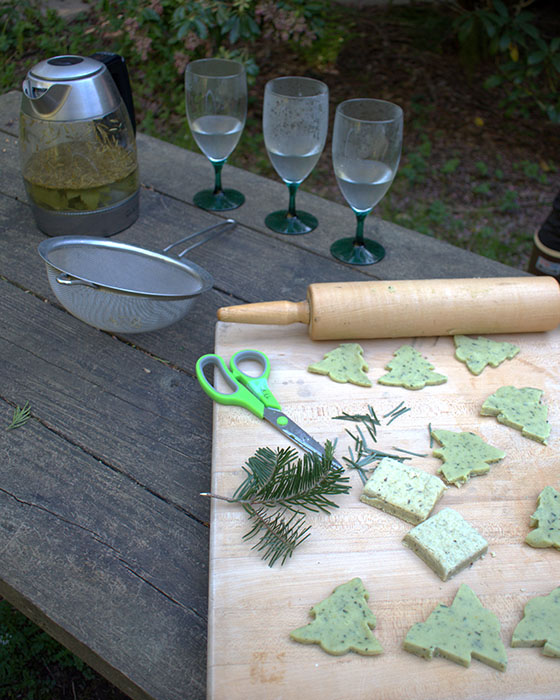
Some reader reviews from “Pacific Feast” had included hopes that she would follow up with a more comprehensive field guide. “Pacific Harvest” provides that resource. Lavishly illustrated with color photos and wider ranging than its predecessor, it covers foraging opportunities and techniques ranging from ubiquitous chickweed and dandelion in yards and alleys to luckier finds like ostrich fern and grand fir needles within easy reach, used to flavor shortbread and to make tea or sorbet.
Some recipes were developed by her students in the wild foraging class she teaches through Fairhaven College. Others come from friends, chefs and her own decades of experimentation. She and her husband, Chris Moench, have lived for the past 30 years on forested acreage off Yew Street Road outside of Bellingham, where every walk through trail or yard provides something for the table.
— By Lane Morgan
Disclosure: One of reporter Lane Morgan’s recipes from her “Winter Harvest Cookbook,” is included in “Pacific Harvest.”