
Local libraries seek solutions to keep vital, popular programs running
An executive order from the Trump administration will have negative trickle-down impacts on libraries in Whatcom, Skagit and San Juan counties, say library employees.
The order calls for cuts to the Institute of Museum and Library Services, or IMLS, as part of the administration’s efforts to cut costs and reduce the federal workforce.
IMLS is the only federal agency dedicated to funding library services. The cuts include the loss of $3.9 million for the Washington State Library, which supports a variety of programs, grants and resources for local libraries.
“This is devastating news,” Bellingham Public Library Director Rebecca Judd wrote in an email.

The funding could have a wide range of impacts, particularly for prison, hospital and tribal libraries as well as the Washington Talking Book and Braille Library. Local library employees said that other potential impacts include:
- Reduced access to online resources like eBooks and the popular Libby app
- The loss of research databases and training for library staff on how to use those databases
- Slower internet speeds
- The end of innovative programs like virtual reality headsets, tabletop gaming grants and assistive devices for those with disabilities.
Those resources are not only popular among patrons but essential to communities, library employees said.
“The eBook usage has taken off like crazy, especially since the pandemic,” Lopez Island Library Director Darren Hoerner said. “There are also people that need it, especially people that are dealing with some sort of either vision or hearing impairments. … For the population on Lopez — which is an older population, more retiree age — these are critical services for continued access to knowledge.”
San Juan Library Director Laurie Orton is also concerned how IMLS changes will impact the state’s tech service, which allow libraries to sign up for IT management and discounts on equipment like computers and hotspot devices. In rural areas where internet access isn’t uniform across the population, that equipment can be crucial for residents who use the library’s internet for things like telehealth appointments.
Library employees said concerned patrons can contact their representatives and share how libraries impact them personally, volunteer at libraries, attend library board meetings or donate needed items.
“Patrons should also know that they certainly aren’t powerless in these kinds of situations,” Upper Skagit Library librarian Chazlyn Lovely said over email. “Libraries are here to support the community, but right now libraries may need support and advocacy in return to continue to do so.”
Disappearing grants
Although the full scope of the IMLS changes is yet to be seen, some libraries are already seeing direct impacts to grants the state provided through IMLS funding.
Orcas Island Library Director Ingrid Mattson, for example, said she received notice shortly after the executive order not to spend any more of a $15,000 grant because there is no one to process the reimbursement requests.
“The cutoff of funds that were already secure was a surprise,” said Mattson. “We’ve had to talk to staff to say, ‘Hey, we either have to find another way to pay you to do the hours that were promised to you’ — a staff person living in a place where housing is scarce and you’re doing what you can to keep it together — ‘or just don’t do this project any longer.’”
Hoerner, likewise, said the Lopez Island Library is now on the hook for $6,000 that was supposed to be reimbursed with grant money.
“For a small rural library like ours, that’s a lot of money,” he said.
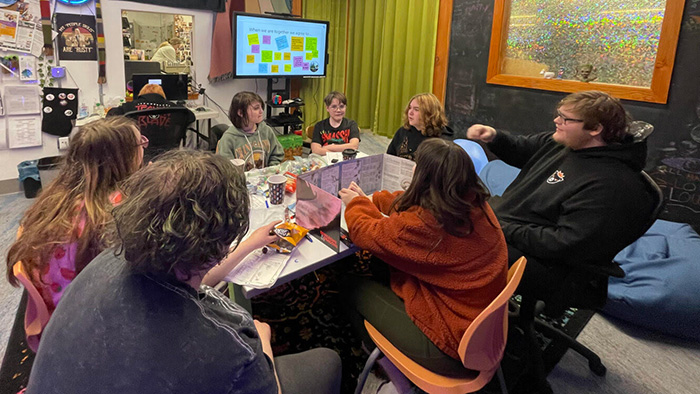
Lovely said staff are halting grant-funded improvements to its role-playing games program, which would have included Dungeons & Dragons games in Spanish and American Sign Language as well as cosplay and LARPing programs where teens could have learned how to make costumes and props.
More than just funding
Some librarians are worried about the more intangible impacts of the IMLS changes. That includes a shift in the organization’s goals under Keith E. Sonderling, who was sworn in as acting director last month.
“I am committed to steering this organization in lockstep with this administration to enhance efficiency and foster innovation,” he said. “We will revitalize IMLS and restore focus on patriotism, ensuring we preserve our country’s core values, promote American exceptionalism and cultivate love of country in future generations.”
Mattson called that focus “one of the more concerning components” of the changes. The phrase “in lockstep with this administration” also raised alarm bells for Orton.
“‘In lockstep’ just brings negative images to my mind from a historical perspective,” she said. “It didn’t encourage me in thinking that they were upholding freedoms and rights, so that really disturbed me.”
Beyond providing books, libraries offer a large range of services.
They provide meeting spaces and operate teen and children’s programs. They rent out things like Discover Passes, instruments, local history curriculum kits and even American Girl dolls. They host craft fairs or technology classes for seniors. They proctor tests for students and give out opioid overdose kits. And they serve as a place to print important documents or charge a phone.
“With the increase in book challenges over the past couple of years and legislation attempts in other states aimed at fining or jailing librarians I wasn’t surprised, but I was still frustrated,” Lovely said. “Libraries do what we can to advocate for the people we serve and ourselves, but there are still a lot of people out there that either don’t know about what we do or they don’t think it’s necessary.”
Looking for other solutions
The IMLS cuts are particularly relevant in Washington, where the state library — and by extension, local libraries — are feeling the pains of the state’s budget multibillion dollar deficit.
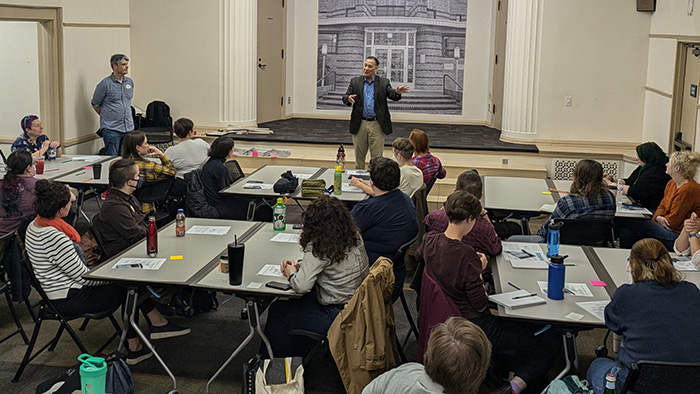
Lovely said without that support, Upper Skagit Library will have to rethink its own budget and offerings.
“My library has an operating budget that just can’t afford on its own to provide certain things — they’re just out of our price range,” she said.
One solution, she added, is partnering with a handful of other local libraries to share costs and staff responsibilities for certain services that they can’t afford to provide individually. The library is also considering pursuing a levy increase later this year.
Funding is also an issue for the Whatcom County Library System, which gets the majority of its funding from local property taxes. It is asking residents to support a library levy increase on August’s ballot. The levy applies to properties outside of Bellingham city limits.
“As federal and state support for public libraries dwindles, local support in the form of property tax becomes essential,” said Mary Vermillion, a spokesperson for Whatcom County Library System.
The tax increase would allow the library to maintain its current staffing, hours of operation and services and address deferred maintenance and opportunities for building projects. The library currently operates 10 branches and served nearly 62,000 library cardholders last year.
Libraries in San Juan County also receive a majority of their funding from property tax levies; they said they’ve seen a swell of support from their communities.
“Walking down the street here [on Lopez Island], I’ve had many people stop me. They know what’s going on and they express their support for the library because they know it’s a community resource,” Hoerner said. “So I feel like we’ve got the community with us in this process. It’s just unfortunate that we even have to go through it.”
— By Sydnee Chapman
Also read in Salish Current:
• “Whatcom READS builds a community of readers,” Jan. 31, 2025
• “The vision of Mount Vernon’s Library Commons becomes reality,” Sept. 24, 2024
• “Library … plus: today’s version provides much more than books,” Feb. 27, 2024
• “Commentary: Vote Yes for Our Library,” Sept. 22, 2022