
San Juan Preservation Trust continues 19-year effort to boost native Western Bluebird population.
The still quiet of West Valley on San Juan Island is broken by a Western Bluebird singing its song — one that has rarely been heard in this location since the songbird species vanished along with their habitat in the mid-1960s.
As more people moved to San Juan Island, the oak woodland and prairie habitats the bluebirds favor disappeared to make room for residential development. The San Juan Preservation Trust, a nonprofit dedicated to working with landowners to preserve local ecosystems, started a project 19 years ago to help reintroduce bluebirds to San Juan Island. SJPT moves bluebird families from Olympia up to the island and helps them thrive. Last month, a family of Western Bluebirds was translocated to an aviary built by SJPT at Krystal Acres Alpaca Farm in Friday Harbor, the first of its kind in three years.
Since the beginning of this project, SJPT had two major five-year pushes by translocating 60 to 90 bluebirds from the prairie in Olympia. This recent translocation is much smaller — only one family was brought up — because of steady population rise on San Juan Island. By building aviaries, the bluebirds could become acclimated to their new location before being released, said Kathleen Foley, SJPT’s special projects director.
Currently, the bluebird count for this season is at 28 adults and on the rise. By continuing to bring awareness to protecting this species and their habitat, bluebirds will thrive on San Juan Island again, Foley said.
Bluebirds are a migratory species, Foley explained — they migrate to warmer climates in the winter and come back when the weather starts to warm up. Ideally, the bluebirds that were translocated will make their way back to San Juan Island.
“It was a mark of success to re-establish this sort of ancient migratory flight way,” Foley said. “They are coming back but not in massive numbers. It may require occasional inputs in the population.”
Anne Kusner, the owner of Krystal Acres Farm that hosts the newly translocated bluebird family, was excited to help with the project. Her friend on the other side of the island housed multiple aviaries, so Kusner expressed to Foley about wanting to help.
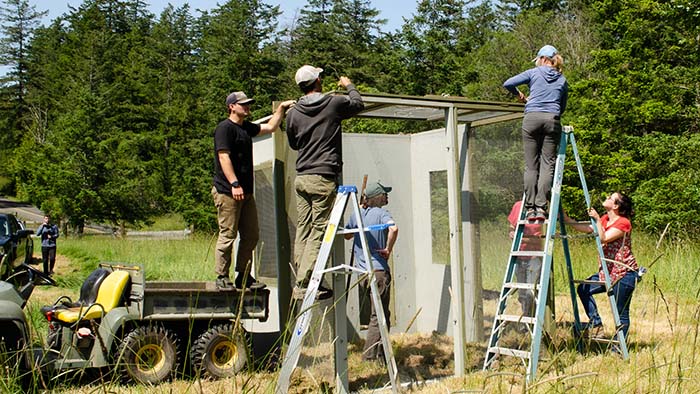
“We found a spot with a nice oak tree and cleared an area and built the aviary with those guys and some volunteers,” Kusner said. “They’ve had volunteers coming and feeding them every day while the aviary was still there.”
About two weeks after the aviary was built, SJPT released the bluebird family into its habitat once they saw the baby birds flying. SJPT volunteers watch and feed the bluebird family daily as the young birds grow, Kusner said.
“We would peer at them through binoculars and check that all was well and, once they were released, we got to watch them fly into the oak tree they’ve been looking at,” Kusner said. “I’m excited to see them nest.”
Since the beginning of this project, the Western Bluebird numbers have been steadily rising on San Juan Island because of SJPT’s preservation actions. Populations statewide, however, are declining — they are designated by the Department of Fish and Wildlife as a species of greatest conservation need.
Growing bluebird populations are a sign of a healthy ecosystem. People living on the island need to be aware of the land they share with wildlife and take measures to protect the small Western Bluebird population, explained Tyler Davis, a department of environmental stewardship project manager in San Juan County and local birding guide.
“If we have healthy ecosystems, then the bluebirds will be here. If something is amiss, those populations decline, and that’s an indicator to us that we need to do something,” he said.
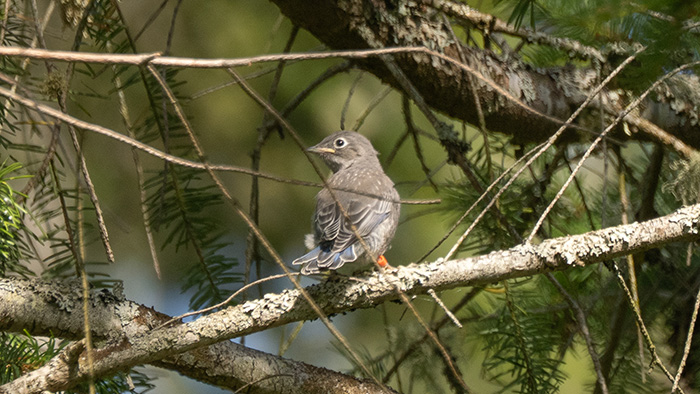
Bluebirds are drawn to oak woodland and prairie habitats and often nest in nooks created by woodpeckers. Protecting habitats in the area is a critical factor for uplifting bluebird numbers. This project not only helps populations of bluebirds rise but also raises awareness for habitat conservation, Foley said.
Another project that works together with bluebird population growth is focusing on cultivating oak woodlands, Kusner said.
“We also have a project with the conservation district on part of a lot where we are reforesting,” Kusner said. “We just put in about 260 oak seedlings, reforesting an entire field where the bluebirds were released.”
Competition and cats
Habitat loss isn’t the only factor that kills bluebirds. The non-native English house sparrow competes for bluebird nesting areas and can be a lethal threat. Watching for this invasive bird on properties is a way that landowners can help bluebirds, Foley said.
The best way to remove unwanted house sparrows is by replacing their eggs with “dummy eggs,” which is swapping sparrow eggs with ones that have been refrigerated. Sparrows will eventually get agitated and leave. Additionally, since house sparrows are not a protected species, they can be lethally removed, Foley said.
An even bigger issue than nest competition is domestic cats, Davis said.
“A couple days ago, a friend sent me a picture of a bluebird that looked like it had been killed by a cat,” Davis said. “Cats are good at what they do, they’re really good at hunting. The hope is that people who are responsible with their cats keep them indoors.”
By being aware of the project and limiting threats on their properties, landowners can help bluebirds thrive, Foley said.
Community participation drives SJPT’s bluebird reintroduction project. Landowners on the island, like Krystal Acres, host aviaries and nesting boxes to house bluebirds. There are currently around 150 nest boxes on San Juan Island, Foley said.
“In the early stages of the project we were putting up nest boxes all over the place,” Foley said. “A lot of people are getting wind of the project and they ask if they can have nest boxes on their property.”
Aviaries, like the most recent build, help the bluebird families become acclimated to the area before being released to nest. This newly translocated family will hopefully breed with existing birds on the island, Foley said.
“More and more people are getting involved here. People are like, ‘What can I do to get them on my property?’” Foley said. “I feel like folks that wind up getting bluebirds nesting on their property feel like they’ve hit the jackpot.”
— By Allie Van Parys