
Commentary: Responding to an essay about Lopez Island’s economic health.
Ed.: The essays, analyses and opinions presented as Community Voices express the perspectives of their authors on topics of interest and importance to the community, and are not intended to reflect perspectives on behalf of the Salish Current.
We’re grateful for thoughtful reporting and dialogue about Lopez Island’s future. These are big conversations, and they deserve both honesty and clarity. A recent essay, “Lopez Island in need of financial health check, community conversation,” raised important questions — some were spot-on, others need more context.
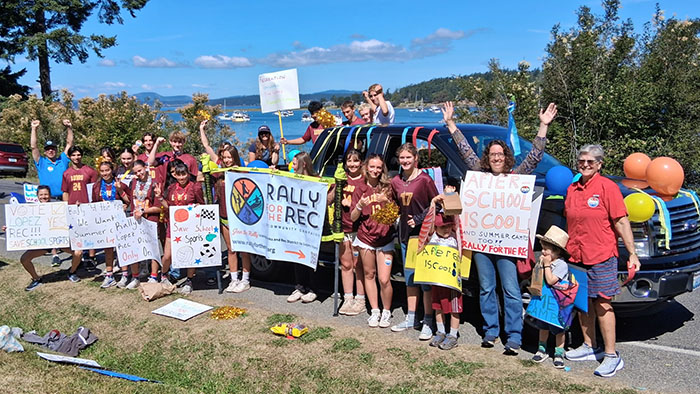
1. Yes, we live in uncertain economic times.
Costs are rising, grants are harder to secure, and many nonprofits are stretched thin. That’s exactly why Lopez Rec is being proposed now — to move away from unstable fundraising toward a sustainable, voter-approved solution for recreation and youth programs.
2. Lopez has many nonprofits — but most run small.
Most local nonprofits operate on less than $500,000/year and rely on grants and donations. That fragility is why school sports, afterschool, and summer programs are at risk. Lopez Rec isn’t “another nonprofit.” It’s a public district with stable funding that nonprofits simply can’t provide.
3. Other big community projects aren’t funded by Lopez Rec.

The pool, Food Center, and library are independent nonprofits with their own fundraising. Lopez Rec does not fund them. The levy is for programs: school sports, afterschool and summer care, and all-ages recreation. If Lopez Rec uses facilities like the pool or school gym, it will be through standard use agreements. Unlike private nonprofits, Rec will be publicly accountable — commissioners are elected, budgets are transparent, and the levy requires renewal every six years.
4. Staffing and “overhead” aren’t waste.
The claim that 40% of the levy goes to staffing needs context. We envision one full-time director and, if needed, a part-time assistant — with competitive pay so they can live here. Elected commissioners — chosen by you — will decide staffing, budgets, and day-to-day details, all guided by ongoing public input.
Staff makes programs possible: coordinating volunteers, scheduling, and keeping kids safe. Without staff, programs collapse — just like youth baseball did this year. Lopez Rec will also provide infrastructure (insurance, accounting, legal support) that benefits multiple groups, creating efficiencies. This isn’t “extra bureaucracy.” It’s how programs run year after year.
5. School funding gap vs. the Rec levy.
Lopez School faces a $300,000 shortfall. The Rec levy dedicates $180,000 annually to athletics — fully covering school sports and protecting classroom dollars. It also sustains afterschool and summer programs now funded by grants set to expire.
6. Property tax concerns are real — but context matters.
Most tax increases here come from rising property values, not new levies. The proposed Rec levy is lower than San Juan’s and comparable statewide. For the median homeowner, it costs less than a single off-island plumber visit — and helps keep that plumber’s family on Lopez by supporting essential programs.
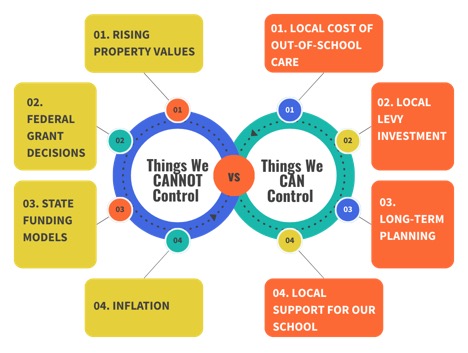
7. What Lopez Rec is — and isn’t.
It is: funding for school sports, youth programs, and sustainable recreation for all ages — sports, arts, culture, wellness, fitness, and more.
It isn’t: money for new buildings, luxuries, or duplication. Lopez Rec complements existing programs and strengthens what we already have.
Bottom line
The article calls for community conversation — and we agree. That’s why we’ve held three Town Halls and have, after careful collaboration, earned endorsements from local organizations.
Lopez Rec is about protecting essentials: keeping school sports alive, sustaining after school and summer programming, and providing recreation that supports health, safety, and belonging for all. This is for Lopez, by Lopez — a locally driven solution to sustain the heart of our community in uncertain times.
For more information, visit rallyfortherec.org
— Brady Smith, Jennifer Poole and Judith Koehler
• • •
We welcome letters to the editor responding to or amplifying subjects addressed in Community Voices. If you wish to contribute to Community Voices, please send an email with a subject proposal to Executive Editor Mike Sato and he will respond with guidelines.
Help keep the local news flowing — support nonpartisan, fact-based, no-paywall local journalism
with a donation to the Salish Current — news for people, not for profit.