
Base fares will double this fall while Western Washington University and transit officials work to preserve the universal student bus pass.
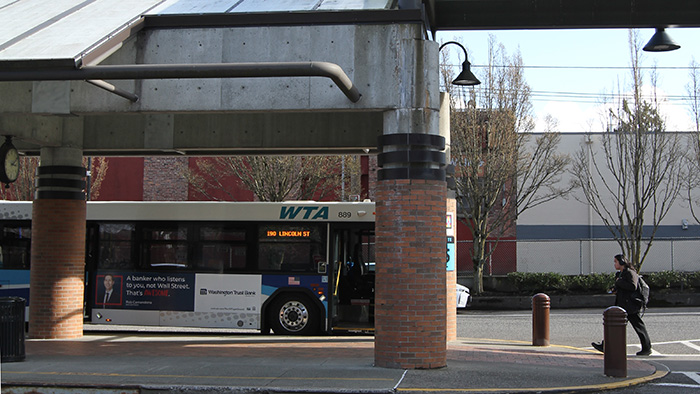
A fare increase approved by Whatcom Transportation Authority in December will raise bus fixed-route costs across the county from $1 to $2 and paratransit fares from $1 to $3 beginning in fall of this year. The proposal has already sparked concerns about affordability.
Jesse Larsen, an 83-year-old Bellingham resident who has relied on WTA buses for more than two decades, said public transportation has allowed her to live independently without owning a car. Passengers 75 and over are eligible for a WTA Gold Card under the current fare structure, allowing them to ride for free on both fixed route and paratransit buses. They will need to pay $1 a ride for fixed routes once the new fares begin. Youth 18 and under will still ride for free.
“I live on Social Security,” Larsen said. “If they raise those fares, it’s going to totally change my life and not in a good way.”
Larsen said she attended a public meeting at WTA’s Hannegan facility where many riders spoke about the impact of the proposed increase.
“It was all students or old people or disabled people,” Larsen said. “There were like 150 of us there. It was packed.”
Maureen McCarthy, WTA director of community and government relations, said staff reviewed research on how fare increases might affect ridership but found little comparable data.
“Most of it was based on large agencies in urban areas,” McCarthy wrote in an email. “Their rider demographics, origin and destination characteristics, fare structures and other factors are quite different.”
The agency estimates the change will generate between $1.5 million and $2.4 million in additional annual revenue beginning 2027, the first full year of the new fare structure.
WTA originally proposed a $60 monthly cap for paratransit riders, but after the public comment, the agency reduced that cap to $30. Despite the adjustments, the broader fare increase remains unchanged.
Student riders
During the approval of the countywide fare increase, a separate question remains unresolved for Western Washington University riders.
The university’s universal bus pass program which currently allows students, faculty and staff to ride WTA buses without paying per trip is under negotiation as the current contract between Western and WTA approaches expiration in September according to Western’s Transportation Services. Western currently contributes $600,000 annually toward the program, according to WTA.
“Our top priority is ensuring continued affordable, reliable access to public transit and maintaining the universal bus pass program that supports equality, sustainability and community connectivity,” Katy Potts, assistant vice president and chair of university police and transportation, wrote in an email.

Western also noted that student engagement around the issue has been significant. “Over 100 students attended the hearings WTA held prior to voting on the proposed increase,” Potts said.
Students say transportation costs are already a challenge.
Kaitlyn Minnotte, a junior environmental studies student at Western and a bargaining committee member with Western Academic Workers United, said many student workers rely heavily on the bus to commute to campus and work.
“I don’t know that a lot of people have $30 to $50 to be giving extra every month,” she said.
Transit concerns extend beyond Western students.
Camellia Yi, a Whatcom Community College student who commutes daily by bus, said public transit is essential for students who cannot afford a car. WCC students pay a $20 quarterly bus pass fee.
“A lot of us don’t have the privilege to have a car, so this is something that is very important, she said. “It’s a benefit that students should have.”
If a new agreement is reached, Western students could continue riding the WTA buses through a university-funded pass system. However, if negotiations fail, students would instead pay fares individually through WTA’s payment system when boarding buses.
Future charges to Western student transit fees after the next contract would require approval from Western students through a campus referendum. For now, the fare increase is set to move forward next year.
“There’s lots of ways to give funding to WTA, if that’s what they need besides putting it on the backs of students and workers,” Minnotte said.
— By Mabaindu Mbawa

Also read in Salish Current:
• “Higher taxes and fewer employees,” Nov. 24, 2025
• “Child care, housing costs hamper business recruitment,” Oct. 16, 2025
• “WTA diesel bus purchase prompts questions re zero-emission progress,” May 19, 2022
• “Electric buses to debut, marking trend in Whatcom County,” June 10, 2021