
Across Northwest Washington, summer festival season is filling parks, breweries, libraries, hotels and community venues with live music.
From Bellingham to the San Juan Islands, audiences can hear jazz almost any night of the week. But while summer performances bring the music into public view, they tell only part of the story. That network stretches well beyond any single venue.
The Everett Jazz Walk, Jazz Center of Bellingham, Centrum’s Jazz Port Townsend workshops, school jazz programs, volunteer-run concert series and venues such as Hotel Leo, Aslan Depot and the FireHouse Arts & Events Center are connected by many of the same musicians, educators and listeners. Students become performers, performers become teachers, and audiences often return as volunteers, donors and board members.
The Jazz Center of Bellingham is one of the central organizations in that network. Founded in 2016, the nonprofit arts and education organization presents concerts and offers jazz education programs, including combo classes and a summer jazz camp for students of high school age and older.
For Steve Jones, a member of the Jazz Center’s board of directors, the organization’s value extends beyond its concert calendar.
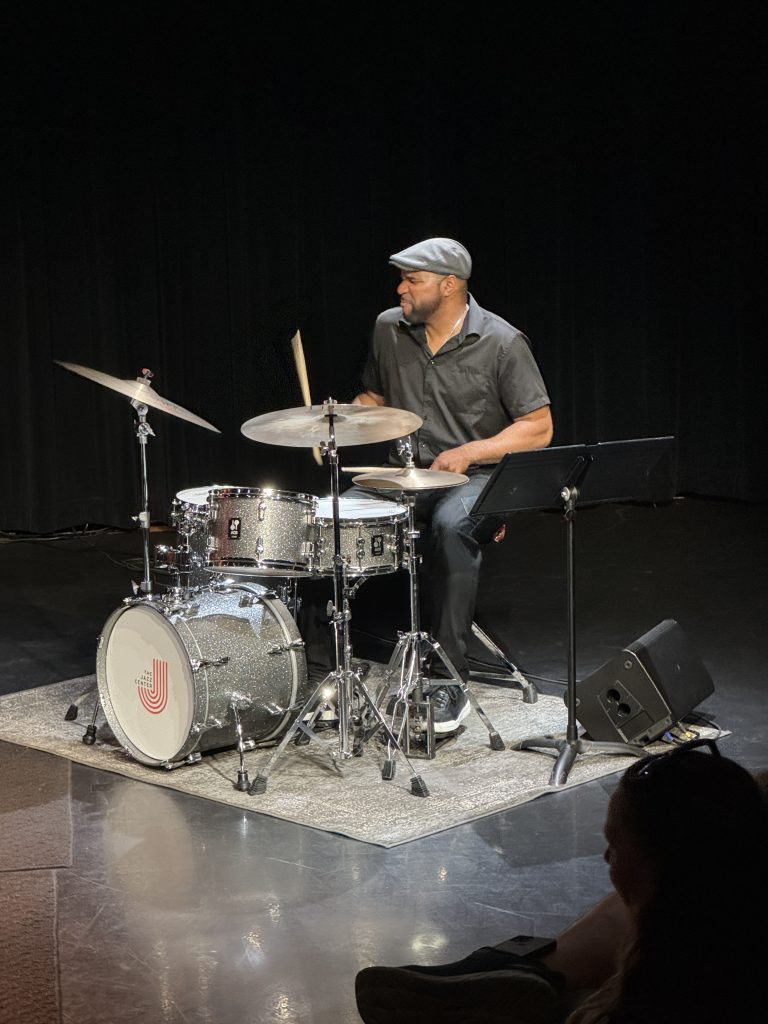
“This organization was originally founded by Julian MacDonough in 2016 and was kept alive by the board of directors who have taken on all of the planning and implementation for the Jazz Center,” Jones said. If the Jazz Center disappeared, he said, the region would lose more than regular performances.
“We would not only lose the education program’s combo classes and summer jazz camp, but we would lose the 20-plus annual concerts with some of the finest local jazz musicians from Portland to Vancouver B.C., plus the national recording artists we have been hosting,” Jones said. “But perhaps more importantly we would lose the community we have built around these events.” Whatcom County Library System has hosted free jazz concerts through its Whatcom Grooves summer music series. Hotel Leo hosts Sunday evening jazz jams. Aslan Depot hosts weekly Tuesday jazz nights, which are “loaded with college kids, the line is out the door every Tuesday night,” said Bellingham percussionist Jerry Steinhilber. [Ed.: Jerry Steinhilber is the author’s father.]
The Jazz Center presents concerts at the FireHouse Arts and Events Center and runs education programs connected to the greater area and college communities.
Steinhilber said he saw the effect of that circuit after hearing students connected to the region’s music programs.
“You should hear these guys,” he recalled being told by educators. After hearing them at Jazz center educational combo program recital at The Blue Room in December 2025, Steinhilber said, his reaction was immediate.
“Holy sh*t,” he said. “We are really making a difference.” For Steinhilber, the recital demonstrated what educators across the region describe as jazz’s cycle of mentorship: today’s students becoming tomorrow’s performers, teachers and community leaders.
For renowned saxophonist and Berklee College of Music professor George Garzone, that relationship between teaching and performance is central to the survival of jazz itself. Garzone’s influence extends beyond his own classroom. Steinhilber and bassist King Dhal both studied with him at Berklee College of Music, while saxophonist Nick Biello studied privately with Garzone during his time at the Manhattan School of Music. Together, they illustrate the relationship between teaching and performance that Garzone describes.
“I spent a lot of time furthering the minds of the young musicians and playing to keep up the art,” Garzone said. “The two fueled together help to keep me on an even keel.” Garzone sees education and performance as mutually reinforcing. “Teaching supports the art,” he said. “The art furthers the teaching.”
That cycle can be seen throughout Northwest Washington’s jazz community, where students move between camps, classrooms, jam sessions and performance venues, learning from musicians who remain active practitioners of the music.
“Keep the Bellingham thing alive,” Garzone said. “That’s important.”
Recent Bellingham High School graduate Lily Earthman represents the next generation emerging from that network—students whose musical education has stretched from school ensembles to community programs and professional mentors.
Earthman credits school ensembles, private lessons and community programs with introducing her to musicians of all ages.That sense of belonging began much earlier.
“My freshman year… the drumline community welcomed me into the big scary high school world,” Earthman said. “I really looked up to them and every year after that I made an effort to welcome new people into the community.”
For Earthman, that tradition of mentorship is one of the community’s greatest strengths. “The people that pushed me the most were my peers,” she said. “They are the ones that really helped me during my music pathway, as classmates and as friends.”
In May, saxophonist Nick Biello performed at Odd Fellows at The Orion in Bellingham as part of a Northwest run that also included performances in Vancouver, Anacortes, Salem, Portland and Seattle. Biello first performed in Bellingham in 2009 at Boundary Bay Brewery. What stood out to him was not simply the music. “I was impressed by the fact that it was a local hang that had a great jazz band playing and that normal everyday people were there, enjoying a social hang and also taking in the music,” Biello said.
For Biello, that audience culture remains one of the region’s strengths.
“We’ve made it a listening music, and it is, but it’s not solely a listening music,” he said. “Duke Ellington played at noisy clubs where people were dancing and socializing.” Biello said communities that embrace jazz as both an artistic and social experience create conditions that help the music thrive. For Biello, the strength of Bellingham’s jazz community can be found in the audiences who continue showing up.
“Bellingham offers musicians nice venues, supportive club owners and hungry audiences that want to hear the music,” he said. “They’re not there to criticize or raise their eyebrows. They’re there to hear it and experience it on an emotional level.”
—By Emily Steinhilber