
DNR approves permit for forest harvest, but opponents say talks continuing
Though logging could potentially be on the horizon near one of the Skagit Valley’s most iconic landmarks, the way ahead remains unclear.
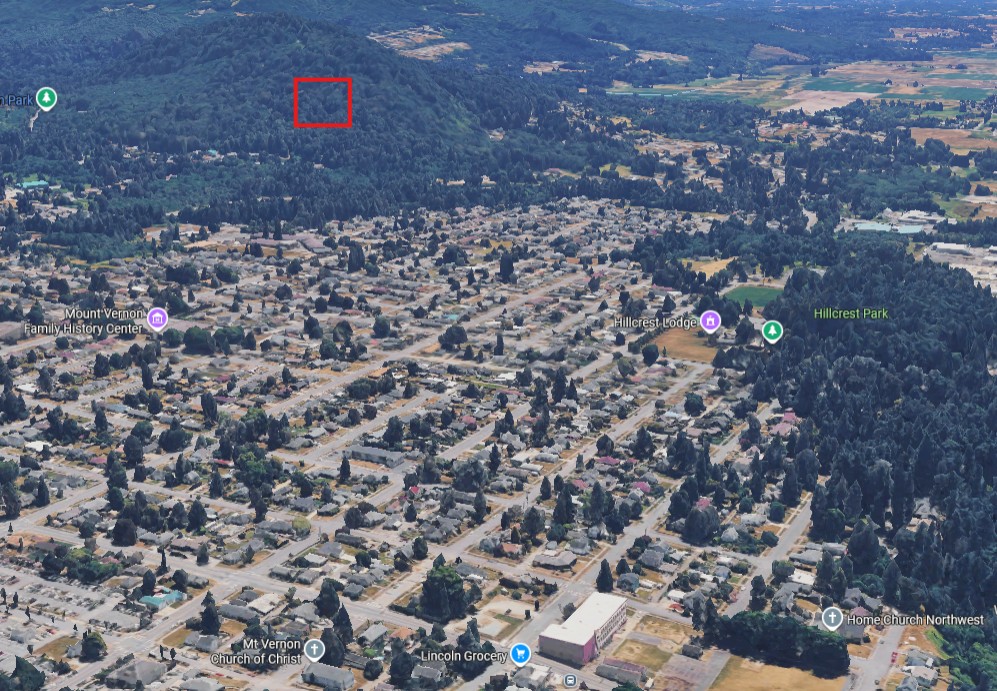
On Aug. 1, the state Department of Natural Resources approved a forest practices application for timber harvest of a 10-acre parcel adjacent to Little Mountain Park.
City of Mount Vernon officials, Skagit Land Trust leaders and concerned neighbors have all expressed interest in obtaining and preserving the forested property formerly owned by Skagit Habitat for Humanity. Nielsen Brothers Inc., a Bellingham-based logging company, purchased the land for $70,000 on June 16 according to Zillow.com. Other interested parties said they were not aware of the sale until about a month later.
In a statement, Habitat’s board of directors acknowledged the impact the sale has had on the community and the potential for ongoing impacts to the landscape.
“While we cannot control who purchased the property while it was listed on the open market, we have heard the voices who argue that we should have considered offering it to the City of Mount Vernon or the Land Trust first,” the nonprofit board stated. “We accept the challenge of making these considerations in the future and are actively working toward a solution that may change possible outcomes.”
In an effort to spread awareness about the issue, Mount Vernon resident Lennis Herburger created a website, savelittlemountain.org, and encouraged people to take action by submitting a public comment to the DNR ahead of the Aug. 1 deadline. He received over 100 comments through the website.
“One of the key things with this parcel is it’s going to be such a visible scar from pretty much anywhere in town, when you look up there,” Herburger said.
But with DNR’s recent approval of the logging company’s permit, not much can be done apart from filing an appeal on the decision within 30 days.
A message from the Save Little Mountain team requested that people who are interested in fundraising hold onto their funds for now, since there is currently no agreement or land available to purchase.
“It is our understanding that the City of Mount Vernon and Habitat for Humanity are currently trying to discuss options with the Nielsen Brothers, though the status of those talks remains unclear,” the email stated. “We have not given up hope.”
Though the parcel is located outside of city limits and thus not subject to regulatory authority by the city, Mount Vernon Mayor Peter Donovan has indicated his intention to determine viable options for it in a recent press release.
The Skagit Land Trust has stated it is working to support the City of Mount Vernon’s efforts to explore options for the future of this land.
“As our population grows and our climate changes, our cities must conserve expansive and easy to access natural areas like Little Mountain,” the land trust noted on its website. “The intact forest found on Little Mountain is important for wildlife habitat, recreation, natural water storage, climate adaptation, scenic beauty and more. This parcel of forest land is important to our community.”
Sam Petska, a forester with Nielsen Brothers, confirmed that the company’s owners have been in talks with entities such as the city of Mount Vernon, but nothing definite has come of the discussions so far. Petska is uncertain what lies ahead for the property.
Neither Petska nor Herburger were aware of any appeals made to the DNR’s decision on the property.
Environmental impacts
The parcel is located in close proximity to the Cedar Hills neighborhood, which is cause for concerns about increased water runoff and soil destabilization above the existing homes. It is also directly below Little Mountain Park’s Bonnie & Clyde Trail.
As a member of the Mount Vernon Parks Foundation, Herburger is actively involved in trail building and maintenance efforts on Little Mountain.
“After building trail up there for the last four or five years, no matter where you’re working, water is always an issue on Little Mountain,” he said.
Oliver Grah, who served as water resources program manager for the Nooksack Indian Tribe, participated in research regarding the environmental impact of clearcut logging in the Nooksack River Basin. Though not familiar with Little Mountain, he believes his experience working in the Nooksack watershed is applicable to logging’s effects, particularly on water resources, as practiced in Northwest Washington.
“Knowing the state regulations that govern forestry in this state and knowing the impacts of logging, a lot falls through the cracks, in terms of environmental impacts, that existing regulations don’t address,” he said.
His research showed that in combination with climate change, forest harvest has an adverse effect on reduced stream flow in the summer and fall, in terms of water quality and quantity. Besides stream flow, the study also evaluated water temperature and sediment transport.
In particular, Grah said, one of the projected impacts of climate change is more rainfall occurring over a larger part of the watershed, which means more periods of time with oversaturated soils. This could lead to landslides and sediment transport, but logging can also increase landslides.
“I’m not saying shut down logging, I’m saying we need to help the logging industry recognize that just because they follow state regulations in their harvest and therefore are in compliance with Forest Practices Act, that doesn’t mean there aren’t adverse impacts to the environment,” Grah said.
As he pointed out, the issue of logging is not specific to the property adjacent to Little Mountain, as there will be other timber harvests in Skagit County.
Just a few years ago, tenants of Sauk River Estates near Concrete appealed a DNR permit for Nielsen Brothers’ logging of a neighboring hillside, citing landslide concerns. They were not reassured by a slope stability assessment.
Petska did not see any similarity between the Concrete project and the proposed project near Little Mountain. He iterated that Nielsen Brothers went through the forest practices application process, which requires identification of topographic landform features that could affect slope stability.
Wildlife concerns
With its two lookout points and miles of trails, the 522-acre Little Mountain Park is an oasis for hikers, bikers, picnickers and more.
Paul Satzinger, another Mount Vernon resident, submitted a public comment to the DNR objecting to the logging, claiming Nielsen Brothers did not sufficiently survey the site for marbled murrelets, a population of seabird in the state that is low and declining.
Satzinger said that based on the information provided, the site “appears to have characteristics consistent with potential marbled murrelet habitat, including large conifers and an age class that may fall within the lower range of suitable habitat. The Forest Practices rules define suitable habitat as forest capable of providing nesting opportunities, and where suitable habitat exists, protocol surveys are required in certain circumstances before it can be concluded that murrelets are absent.”
However, Robert Waddell, a biologist with the North Puget Sound Region of the state Department of Fish and Wildlife, said that according to the department’s priority habitat and species maps, there is no indication that marbled murrelets have been documented around Little Mountain Park.
“I know that in my 8.5 years as the district biologist, we haven’t conducted any murrelet surveys in this area,” Waddell said.
—By Kira Erickson