
Citizens have taken a ‘vigilante justice’ approach to what many call a growing surveillance threat as automatic license plate cameras continue to appear across Washington
Shoppers at Home Depot in Bellingham have recently been greeted with an unexpected sight: Two of four automatic license plate recognition cameras installed on the business’s property were cut down, rendering them inoperable.
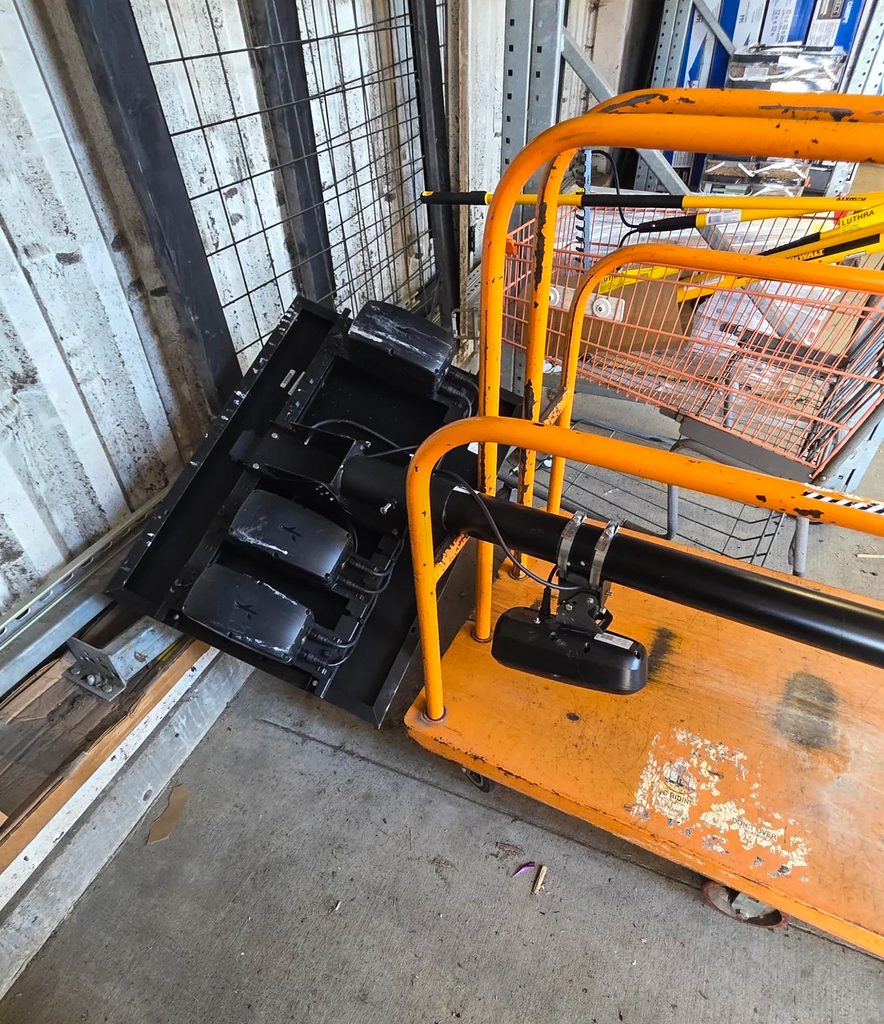
This act of apparent vandalism is only the latest in a growing trend online — citizens cover their faces to hide their identity, then record themselves using power tools to cut the metal poles that support the cameras. Videos posted to social media routinely achieve millions of impressions, and creators have even begun offering financial rewards for such actions.
Law enforcement agencies have until Sept. 26 to comply with Washington’s Driver Privacy Act, the first law in the state regulating automated license plate readers. The act requires officers to obtain a warrant before accessing private license plate reader data, among other restrictions.
Why has the trend become so popular?
A core motive behind the trend is citizens’ concern over lack of privacy. Automatic license plate recognition cameras use AI detection models to recognize identifiable information — such as make and model, license plate number and unique bumper stickers — from every vehicle as they record, then establish a searchable database of their movements. Many fear that this database can be used to track them unwillingly and point to a complete inability to opt out as an infringement upon their personal freedoms.
“The lack of awareness and lack of consent, and the broad vacuuming (of data) is a whole new realm of dystopia,” David Birdsong, a Bellingham resident and longtime software engineer, said.
All four license plate cameras at the Home Depot on Telegraph road were built by Flock Safety, the industry’s leading company.
Per Flock’s website, “there has never been an incident in which customer data was accessed or exfiltrated by an attacker.” Yet the cameras’ recordings have repeatedly been used by police officers to stalk romantic interests and ex-partners without their knowledge, raising questions about the validity of Flock’s data security.
“The accountability of a private company is minimal,” Birdsong said. “For the public to count on their discretion, their good judgement, is just folly.”
In response to concerns like this, Will Freeman launched his website, DeFlock, in 2024. The site provides a comprehensive, real-time map of every active license plate camera in the United States, and has become a go-to resource for those who protest their installation.
Indigo Olson, a member of the group Flock Off Bellingham, is among the many users of DeFlock. They noted how the site’s leap in popularity seems to follow a general rise in anti-ALPR sentiment in the United States.
“It’s interesting to see, right as we’ve been ramping up our efforts, that we happen to be coinciding with this national movement,” they said.
Multiple companies produce the cameras
Flock isn’t the only company producing automatic license plate cameras, but they are by far the largest. Per DeFlock’s data, over 94,000 of the roughly 114,000 cameras in the United States are made by Flock, with companies like Motorola and Genetec each responsible for several thousand more.
In Washington, 1,520 of the 1,676 total license plate cameras are Flock cameras, according to DeFlock.
Flock has amassed the lion’s share of public scrutiny both on account of their industry dominance and because of their ties to high-profile figures like tech billionaire Peter Thiel, co-founder of Paypal, Palantir and Founders Fund.
“Flock and Palantir are very close,” Birdsong said. “Palantir reaches into every single thing they can get their hands on, including our voter data, our tax data, our tax history.”
Thiel’s Founders Fund played a major role in Flock’s $275 million fundraising year in 2025, though neither company has disclosed the precise investment amount.
Use of flock cameras by federal immigration agencies
A 2025 audit of Flock’s network activity raised further concerns about data security when researchers at the University of Washington found that the United States Border Patrol Agency — which works alongside Immigration and Customs Enforcement — accessed the license plate camera data collected by at least 17 agencies in Washington.
In most of these cases, Border Patrol agents accessed this information unlawfully. Ten of the 17 agencies were Washington police departments that had not permitted Border Patrol to view any of the data collected by their license plate cameras.
In a statement provided by Border Patrol officer Jason Givens, a Customs and Border Patrol spokesperson denied any illegal actions on their end.
“The U.S. Border Patrol’s Blaine Sector utilized a standard subscription service to access law enforcement information for criminal law enforcement purposes,” the statement reads. “Recklessly limiting the Border Patrol’s ability to use law enforcement camera systems could hinder crime detection and delay response times, ultimately affecting the safety and well-being of our communities.”
Givens did not respond to a request to elaborate on the “standard subscription service” used by the Blaine sector, which oversees Border Patrol activity across the entire western region of Washington.
State law maintains that any person intentionally accessing a government agency’s computer system or electronic database without authorization is a class C felony. Databases maintained by local police departments, such as those whose information was accessed by Border Patrol agents, fall under this category.
Yet as soon as Border Patrol agents gain access to the data, they are able to track civilians and carry out arrests all the same.
“Who cares if they don’t use it in court?” Birdsong said. “Do they use it in their policing? Do they use it in their searches?”
Olson echoes this sentiment, and sees how license plate camera data could very well have been used in Bellingham to make immigration-related arrests.
“You hear a lot about the immigration raids happening in and around Home Depot and Lowe’s and places that have a lot of Flock cameras,” they said. “There’s a strong connection there.”
Reappearance of cameras at Home Depot
Just weeks after the two license plate cameras at Home Depot were cut down, they reappeared. A new Flock camera now stands affixed to the same metal pole of its predecessor, aimed away from the store’s parking lot and instead filming the vehicles that drive down Telegraph Road.
Because this camera is technically on private property, it sidesteps many of Washington’s legal limitations. License plate cameras operated by local and state agencies must adhere to the 2019 Keep Washington Working Act, which restricts data sharing with federal immigration enforcement. As a private company, however, Home Depot is excluded from this law and thus able to share their data freely.
Legislative response in Washington
Washington Gov. Bob Ferguson signed Senate Bill 6002 into effect on March 30, adding legal protections that aim to limit government agencies’ use of license plate camera data.
“It prohibits cameras near sensitive areas, like protected healthcare providers and courts, including immigration courts,” Ferguson said at the bill’s signing. “It limits the retention of the data these systems generate, and creates penalties for unauthorized access.”
Still, some citizens consider SB 6002 a shortcoming.
“I think the bill is a great start,” Olson said. “But it only applies to cameras that are operated by public entities. Because every camera in Bellingham is on private property, the bill does not apply to them at all. There’s no oversight.”
Olson’s group hopes to change this by reaching out to Bellingham legislators for further restrictions on all license plate cameras that film public spaces.
“Clearly, it’s something that people of our city care about,” they said. “My hope is that our city councilors and our mayor will be receptive to the will of the people and enact some regulation.”
—By Josh Mossman