
Wild Mushroom Show set for Sunday in Bellingham
Buck McAdoo hunched over his microscope at the PNW Mushroom Lab and Herbarium, aka his shed in the backyard of his home in Bellingham. He was looking at the tiny spores bursting from the tubes of a mushroom he collected, apprehensive whether there would be enough specimens for the upcoming annual Wild Mushroom Show. October is usually the best time for fungi in the forests of the Pacific Northwest, but the shortage of rainfall is not ideal for mushroom growth.
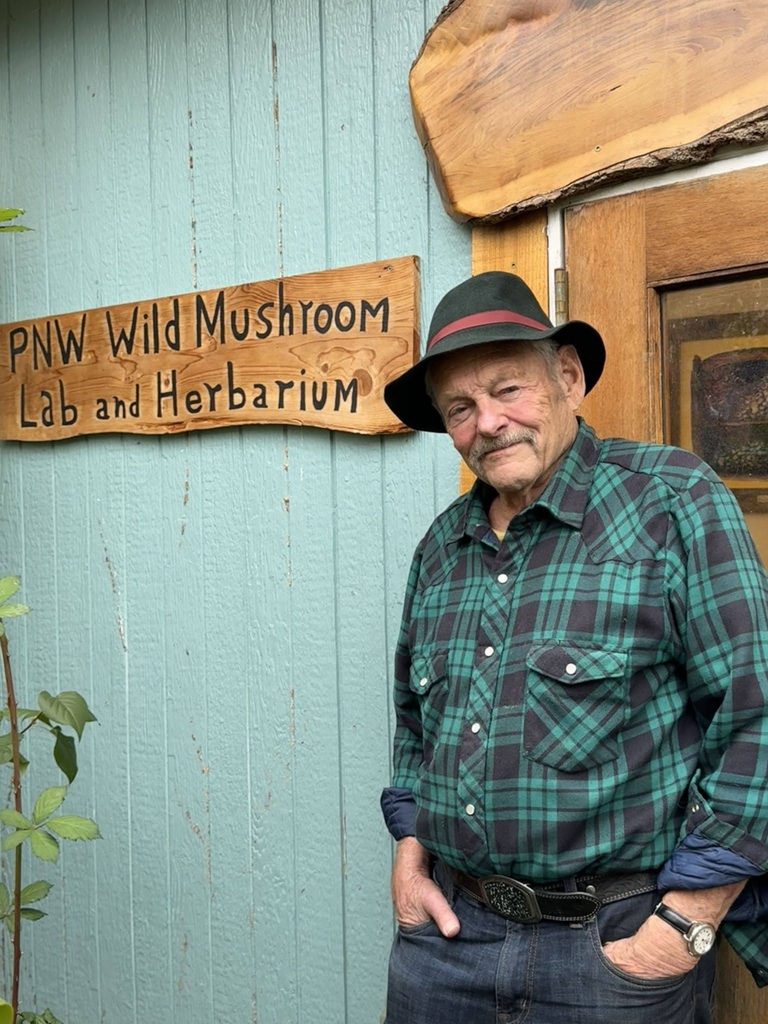
“We won’t know until a few days before the show because the mushrooms, especially the smaller ones, can only be kept a few days,” McAdoo said. “That’s why you need to make notes and photograph them where you find them.”
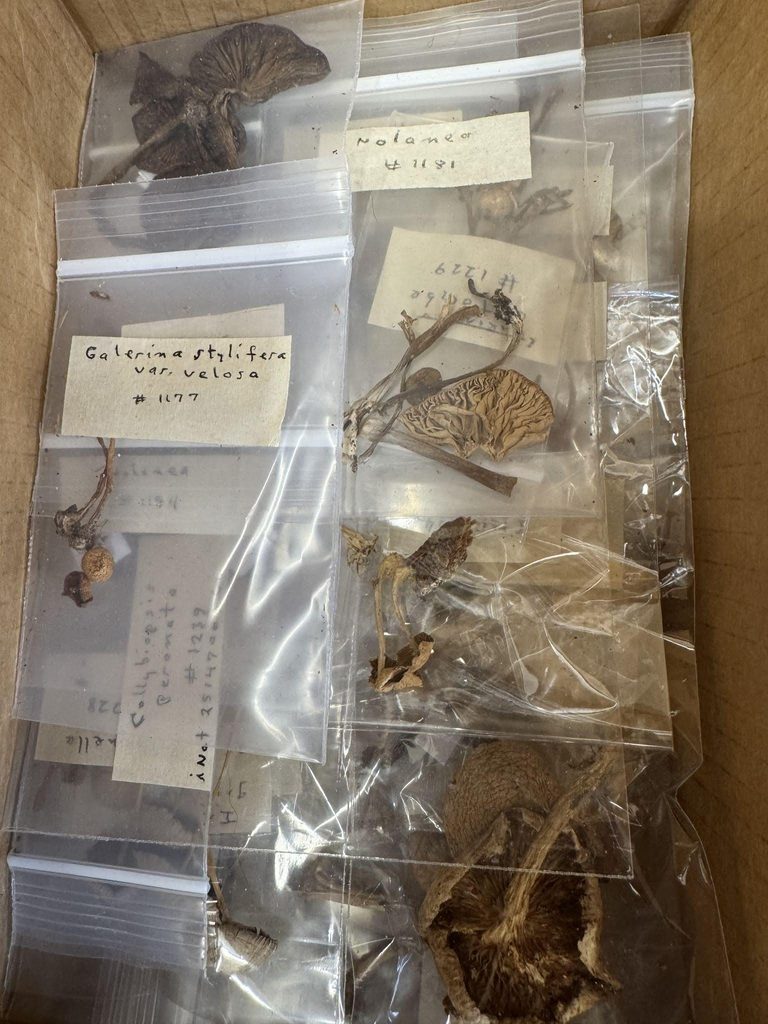
Running in its 34th year, the Wild Mushroom Show will be held on Oct. 25 at the Fisherman’s Pavillion at Zuanich Point Park. There will be about 20 different families of mushrooms on display, all collected by McAdoo and the 300 or so other members of the Northwest Mushroomers Association. Some of their favorite haunts include the woods near Mount Baker, Hundred Acre Wood and the trails above Lake Padden.
A retired fisherman who worked in Guatemala and Honduras, McAdoo had wanted to write a book about his adventures. That didn’t turn out, so he found his peace with mushrooms. He recalls his childhood on the islands around Maine when he and his grandad would look for edibles.
There weren’t a lot of books on mushrooms back in the 1950s. But nowadays, collectors like McAdoo would send off samples for DNA sequencing to discover new species.
“You might walk past what you think is a boring brown mushroom in the woods. But the appearance of mushrooms can change depending on the conditions,” he said. He has travelled as far as Tibet and Bhutan in his hunt for exotic species and has documented his finds in thousands of photos. Closer to home, he likes looking for fungi in the woods near Deception Pass and at Berthusen Park in Lynden. The moss covered sand dunes at Deception Park, he said, is a good environment for rare species.
McAdoo likes to look for edibles. “You need to be careful though. Some of those mushrooms growing under the oak trees on the campus of Western Washington University are Death Caps,” he said. He also knew of a landscape artist in Victoria who mistook a coral pink mushroom in his backyard for an edible and died a few days later.
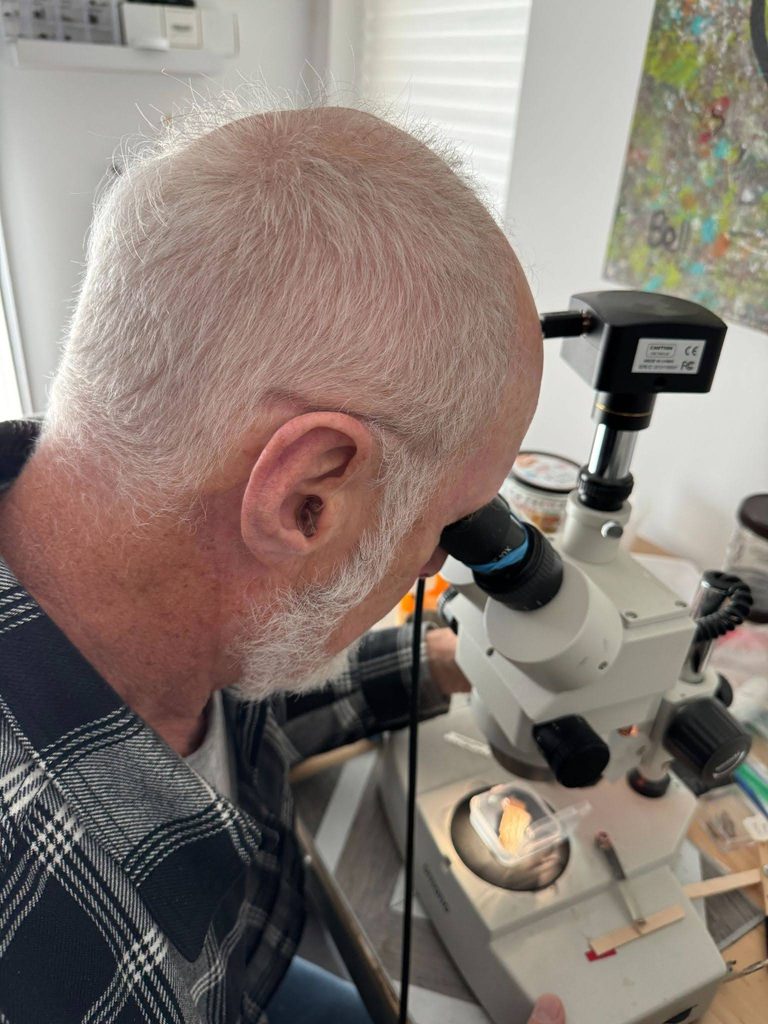
In addition to fungi, the Wild Mushroom Show will include exhibits of lichens and slime molds. Bellingham resident Larry Bell has been collecting slime molds for three years. Under his microscope, he looked for the amoeba that might have hatched from the spores of a patch he collected from a Chuckanut trail.
“They start as plasmodium, these networks through which cytoplasm flows toward a food source. Then they form sporangia which release spores. Those become protozoa with tiny flagellas that help them swim around until they move into a less liquid environment. They then become amoeba and at this stage they reproduce sexually,” Bell said.
That, in simplified terms, is the life cycle of slime mold. Most hikers would probably walk right past those slimy patches on the trees and logs.
“One of them is called Dog’s Vomit,” Bell’s wife, Kathy chimed in. The name befits its appearance.
Bell, a retired physician, has long been interested in photography, specifically microfossils when they lived in Texas. But when they moved to Bellingham, he had to turn to microbes of a different kind since the climate in the Pacific Northwest does not encourage formation of fossils seen in a drier climate.
Bell feeds his slime mold a concoction of boiled wood and oatmeal. He is fascinated by how they form the networks in finding food sources. Studies have shown that slime mold can map out the most efficient networks between pieces of oatmeal and can potentially be used in urban design. One study in 2010 showed how slime mold mapped out the Tokyo subway system.
“Slime molds may have their role in solving human problems in the future, maybe in communication and the understanding of cells,” Bell said. “They produce slime trails which help them ‘remember’ their paths.
“But for me, I simply want to share their beauty and hope more people appreciate them.”
Rachel LeWitt, president of the Northwest Mushroomers Association, said she hopes more people will join the association’s “forays.”
“Last month, we wanted to look for a particular type of edible that’s related to a lion’s mane. We were at the right elevation, and it had recently rained. Within minutes, we have this giant specimen of it right off a tree. Farther down the trail, we found another one. It was meaty and delicious,” she said.
As for McAdoo, his love of fungi goes beyond just a hobby. “I have chosen green decomposition under a paper birch when I go because my favorite edible, Leccinum scabrum, grows under them. I will be eating them forever!” he said.
—By Jenny Lam