
From emergency shelters to long-term housing solutions, Bellingham’s community works together to provide a safety net for the unhoused.
Hanah Warthan’s life changed direction days after she served as an honorary pallbearer for her friend Danayale Wilson in September 2023. Wilson grew up in Lummi Nation, devoting her life to helping people with substance use disorders and people without housing.
The people Wilson became close with while she was a peer support counselor at Lummi attended her funeral, eulogizing her as a badass and a strong, independent woman who could make anything happen.
“This wasn’t just a job for her — she would go to an encampment at any hour if someone needed help,” Warthan said. “I wondered if I could fill her shoes.”
Warthan, an outreach worker and a lifelong Bellingham resident, then founded Mission for Missy, a nonprofit whose volunteers have gone to the WinCo, Walmart and Bakerview encampments to support people experiencing homelessness. She started Mission for Missy to honor her son’s girlfriend, who died of a Percocet overdose as a teenager.
Volunteers at Mission for Missy provide naloxone, or Narcan, to reverse an opioid overdose. The Lummi Tribal Health Center supplies Warthan with Narcan every month to distribute to people in the encampments.
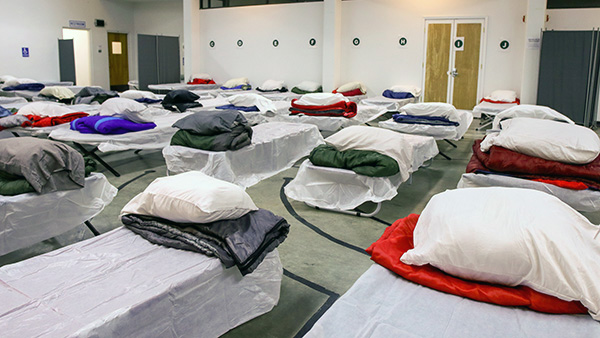
“I can do this,” Warthan said. “I am not scared to go help in the encampments and feed homeless people. We’re in a fentanyl crisis in Bellingham, and I am going to save lives.”
Warthan works in tandem with organizations like Bridge2Services and Misfits MADE. They distribute bottled water, sack lunches, frybread, pizza and chili to people in encampments year-round every weekend.
“I don’t feel alone, as many people are out there doing the same thing,” Warthan said. “I fell in love with the work I am doing. It takes a special kind of person to do this work. The mission continues even though Danayale has passed.”
What the unhoused need most
The fentanyl crisis has had a major impact on the unhoused in Bellingham, and is a part of life in the encampments, Warthan said.
When an encampment is cleared — like the Northwest-Bakerview encampment was the week of Jan. 20 — the unhoused enter a housing pool, and then wait for a home placement that could take months, said John Dunne, a retired psychiatrist and a contributing essayist with Salish Current on homelessness and those experiencing it. People living in encampments would benefit from staying at a 24-hour shelter while they wait for permanent housing.
Other factors have contributed to the rise of unhoused people in Bellingham and Whatcom County during the past couple of decades, including the slowdown of construction of new homes since the Great Recession, steadily rising rents and the lingering impacts of the COVID-19 pandemic.
The high cost of housing in the region means many households are one medical emergency or job loss from becoming unhoused or housing insecure, said Greg Winter, executive director of the Opportunity Council in Bellingham.
“People may not know where they’ll sleep the next night, or they are unsure of how long they can stay where they are,” Winter said. “There simply aren’t enough homes available for everyone. We also need more safe, clean and accessible emergency shelters.”
Mothers fleeing domestic violence situations with their children may no longer be able to provide their own housing, along with college students, those employed in low-income jobs, people relying on disability or Social Security payments and people with drug and/or alcohol addictions, Dunne said.
“People become homeless because they have no one to turn to for help, like family,” Dunne said.
For people currently couch surfing, living outdoors, in vehicles, encampments, emergency shelters and transitional housing in Bellingham and Whatcom County, the goal is to move into affordable and permanent housing to break the cycle of homelessness, Winter said.
“Many people experiencing homelessness are vulnerable to violence, theft and exploitation,” Winter said. “Secure environments — both in shelters and on the streets — are critical.”
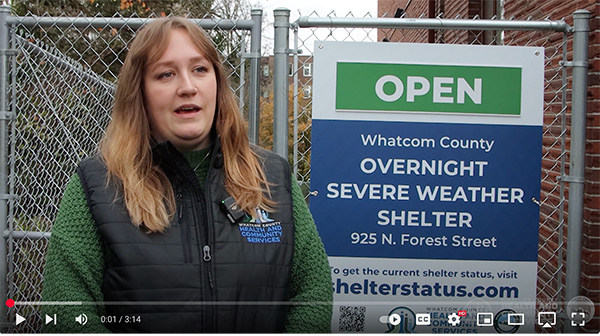
In addition, the unhoused are in need of health care support including medical attention, preventive care and behavioral health services, Winter said. People without homes also need access to restrooms, showers, laundry facilities and clean clothing, as well as supplies like soap, toothpaste, menstrual products and first-aid kits.
Legal assistance should also be on hand to help the unhoused with issues like eviction records, criminal records or custody disputes, Winter said.
Reaching out to the unhoused
The Opportunity Council in collaboration with Whatcom County conducts an annual survey of homelessness in collaboration called the Point In-Time (PIT) count. On a single night in January 2024, the PIT counted 846 people experiencing homelessness in Whatcom County. Around 40% of them have experienced chronic homelessness, meaning they have been without a home for more than a year.
“In recent years, we’ve seen a big increase in older adults without homes in the PIT count,” Winter said. “Many people are living on fixed incomes, especially seniors and people with disabling conditions.”
Social Security benefits, despite cost-of-living adjustments, are not keeping pace with the rising cost of living in Western Washington, said Jennifer Armstrong, executive director at the Joyce L. Sobel Family Resource Center in Friday Harbor.
“Many people over 60 have no retirement savings and no security net,” Armstrong said. “This pushes them into the possibility of becoming unhoused at a later age.”
Whatcom County officials recognize that PIT data is an incomplete assessment, but it gives county officials a better sense of what they can do to provide the right support and how to respond to current conditions, said Chris D’Onofrio, housing and shelter supervisor at Whatcom County Health and Community Services in Bellingham.
Whatcom County Health and Community Services will commit $17.3 million toward housing and homelessness services in 2025, including contracts with nonprofits for emergency shelter, rapid rehousing, motel vouchers for homeless families with children, transitional housing for those exiting homelessness and permanent supportive housing, D’Onofrio said.
Opportunity Council also offers direct assistance for basic needs, like warm, home-cooked meals on Wednesdays and Thursdays at Maple Valley Inn inside Faith Lutheran Church, and support with basic food benefits/EBT cards, Winter said.
“Wraparound services offered by the Opportunity Council connect people to providers like the Washington State Department of Social and Health Services, helping them build the skills and income needed to live on their own,” Winter said. “Wraparound services support the whole person; not just their need for a home.”
A temporary reprieve
PeaceHealth, Unity Care NW and Whatcom County Health and Community Services currently operate the Way Station, a health care and hygiene center for the unhoused on North State Street in downtown Bellingham. The hygiene side of the building opened its doors in November.
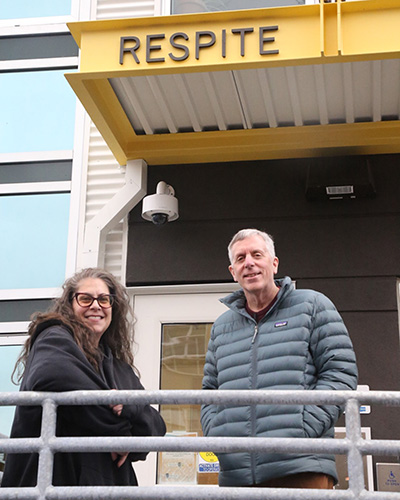
“Folks can drop by for a shower, a shave and other hygiene needs, or to do laundry,” Winter said.
The Way Station is designed to be a safe space where people experiencing homelessness can take time to heal after a hospital stay, getting wound care and other professional medical help to support a complete recovery, Winter said. The medical respite side will open this spring with 17 beds to support people without a home when discharged from a hospital.
YWCA Bellingham has partnered with Whatcom County Health and Community Services Department and the City of Bellingham to convert a building to a shelter for women and young children.
The building, a former ketamine clinic located at 315 Lakeway Drive in the York neighborhood, will offer 20 sheltered beds for 20 women with their accompanying children under 5 years old, D’Onofrio said. The shelter, also equipped with a shared kitchen space and bathrooms, is slated to open this March.
According to Whatcom County housing pool data from August 2024, around 130 unhoused single women with children would potentially qualify to stay at the facility until they find permanent shelter.
Pregnant women can also stay at the shelter, said Alle Schene, CEO of YWCA Bellingham, in a statement. Many shelters serving individuals do not allow guests to stay after the birth of their child.
Lend a hand
Mission for Missy volunteers, along with community members, donate tents, coats, shoes, canned goods and blankets in addition to food for encampment residents during the rainy and cold winter months, Warthan said. Mission for Missy welcomes anyone willing to hand out food and supplies at encampments on the weekends.
Dunne, who has joined the Opportunity Council’s Homeless Outreach Team for ride-alongs, encourages Bellingham residents to volunteer for several nonprofits around Bellingham to help the unhoused, such as the Lighthouse Mission and CAST (Coffee and Sandwiches Together)
The Bellingham business community can also support the unhoused by hiring them for a job, Dunne said.
From surviving to thriving
Looking into a longer-term solution, the Opportunity Council and the City of Bellingham are investing in building 130 affordable rental units and a childcare center with bicycle and pedestrian access near Bellis Fair Mall. Construction should be completed by 2026–2027.
The first phase of the project will include 65 rental units for families and children who are below 60% of the area median income in Bellingham, Winter said. The Bellis Fair project will also include an early learning center for toddlers and preschoolers.
The second phase of the project will make rental units available for older adults exiting homelessness or who have a disability, Winter said.
“Projects like these give us hope for the future of our community,” Winter said. “At the same time, there’s a lot more to be done in our community in responding to long-term needs like finding a home for everyone.”
— By Catherine Skrzypinski
Also read in Salish Current:
• “Winter shelters help the unhoused while reckoning with capacity limits,” Jan. 10, 2024
• “Homeless student numbers trend up; agencies, school districts respond,” Nov. 17, 2023
• “Can we prevent homelessness?” March 31, 2023
• “Why choose to remain unhoused?” Dec. 22, 2022
• “Risk of homelessness high for many in the San Juan Islands,” March 18, 2022