
The view from the editor’s desk on Earth Day juxtaposes recent policy changes with a regional culture of multifaceted environmental action.
A day meant to support environmental protections was, this year, all but trampled by a nation-sized elephant in the room.
On the first day of the new Trump administration, the U.S. withdrew from the international climate change treaty known as the Paris Agreement. Through a sweep of executive orders since, President Donald Trump ordered many national forests to open for logging, developed new permits for hunting on Alaska’s national preserves and wildlife refuges, changed the Endangered Species Act to make it easier to remove species from endangered lists, canceled requirements for oil and gas companies to report methane emissions, relaxed environmental review processes for federal infrastructure projects and more.
Some, like the Center for Biological Diversity’s Drew Baloga, have called it an “across-the-board disregard for environmental protection.”
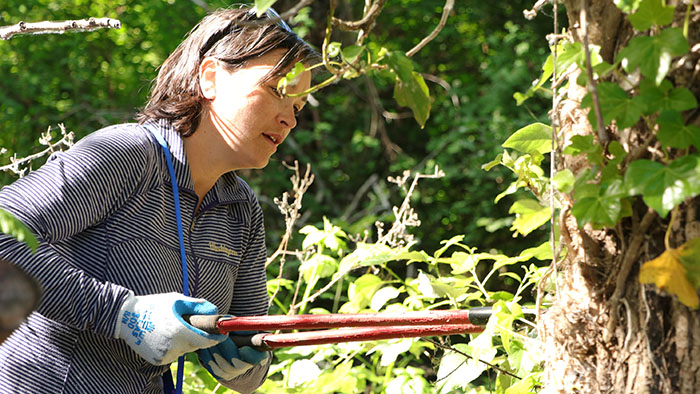
So what does Earth Day — a demonstration among a billion people and nearly 200 countries — mean this year?
Earth is a big place. Within it, communities around the Salish Sea are widely recognized as leaders in environmental advocacy. The Pacific Northwest has become known for progressive policies, green infrastructure and, perhaps most important, grassroots power. Salish Sea coastal communities have a history of activism, indigenous leadership and environmental ethics among residents.
Since the last Earth Day, these are among the major environmental topics that have touched this region.
Early on, state and local governments drafted plans to revegetate sections of the lower Skagit River to give shade to salmon-bearing streams. Stakeholders envision a much healthier passageway by 2080.
Political leaders in Washington braced for triple the volume of Alberta crude, increasing oil tanker traffic in the Salish Sea, with the completion of the Trans Mountain Pipeline expansion in British Columbia.
Orcas Power and Light Cooperative launched an ambitious five-year campaign to bring tidal-power-generating capabilities to San Juan County waters.
Visit Earth Action Day for maps, organizing
tools, quizzes and more to help take action
on Earth Day and every day.
Bellingham created its urban forestry management plan to protect and enhance trees in the city.
The Fish and Wildlife Service enacted a controversial plan to kill nearly a half a million barred owls in 30 years. Staffers marked the Salish Current region on the map as the “Canadian Connector” and “North Washington West Cascades” areas. Despite the proposed timeline, no progress has been made in these areas.
National Hydropower Association sued the National Marine Fisheries Service for creating a standard for Endangered Species Act protections that goes beyond congressional intent. In the area, that means a possible delay to improving operations at the upper Skagit River hydropower dams to enhance salmon conditions.
Lummi Natural Resources set a goal to eradicate European green crabs, among the most invasive marine species in the Salish Sea, as it catches an increasing number yearly.
Washington’s Board of Natural Resources approved a package of nine timber sales involving 1,200 acres of trees across Western Washington, a revenue of around $13.8 million.
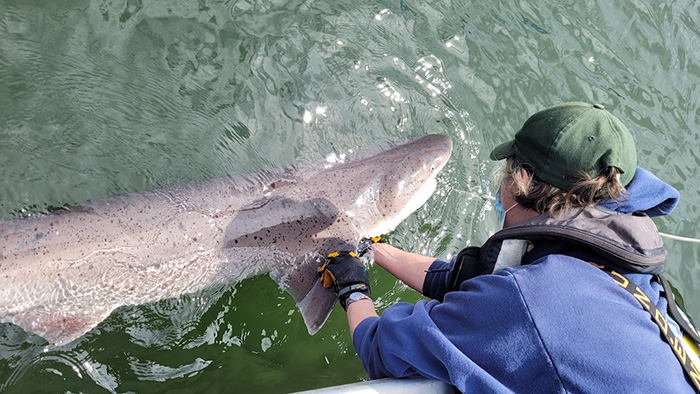
Researchers discovered a possible haven for broadnose sevengill sharks in South Puget Sound. In the process, they also discovered a soupfin shark, which had never been formally documented anywhere in Puget Sound.
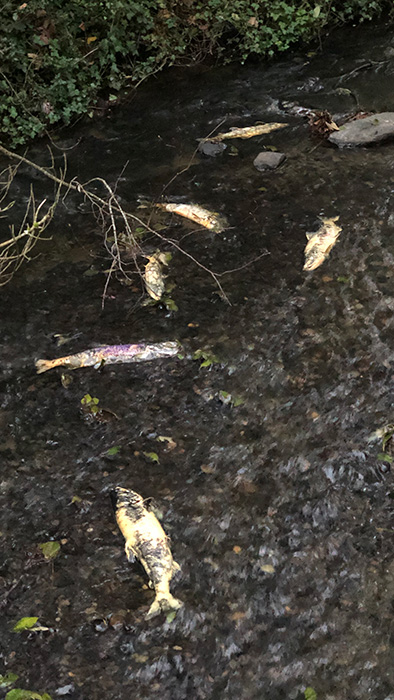
Through backyards of Fairhaven and Happy Valley in Bellingham, chum salmon swam as far as Interstate 5 for the first time in over a century.
The invasive “murder hornets” — northern giant hornets — making 2020 headlines were officially eradicated.
The new year
With the new year came two new, consequential figures to environmental policy in the area. Gov. Bob Ferguson, a staunch advocate for environmental protection and sustainability, and Trump, who generally takes a deregulatory and pro-industry approach, drawing criticism from local environmentalists.
This is where things began taking a turn.
First, Trump dissolved the San Juan Islands National Monument Advisory Council, a group making conservation and land management plans, with Executive Order 14217.
Skagit, Whatcom and San Juan counties released their state-mandated climate-related hazard assessments, finding that, while overall drought and sea-level rise are of major concern in the region, specifically Skagit predicts a hit in crop production, San Juan will see a reduced water supply and Whatcom will see excess fires.
Meanwhile, Trump announced a new executive order to increase timber production from public lands such as Mount Baker-Snoqualmie National Forest. Environmental impact assessments would no longer be required to log areas that are more strictly managed under current interpretations of environmental laws.
Most recently, the Center for Biological Diversity sued the Trump administration for denying Endangered Species Act protections for a rare specialist moth that lives on San Juan Island during the president’s first term.
More than a day
Earth Day’s 2025 theme is Our Power, Our Planet, calling for union around renewable energy with the goal of tripling clean electricity by 2030.
Today also marks just three months of federal policy changes — many more will come.
Meanwhile, community leaders continue what they’ve always done, creating slow and steady change.
Islanders supporting the San Juan Islands National Monument sent an email encouraging the public to stay engaged and involved: work with local Bureau of Land Management staff in their efforts to manage lands, and contact members of Congress about the importance of continued protection, conservation and restoration of lands in the National Monument.
The next century will be punctuated with goals of enhancing community preparedness and emergency response, integrating climate projections into land use and development planning, improving transportation reliability and ensuring long-term water security through conservation.
Peter Janicki, a legacy logger in Western Washington, prefers to expand logging in places like Washington which holds some of the highest-regulated forests in the world in terms of environmental protection compared to overseas forests with none.
While it’s easy to get caught in eco-grief, Michael Feerer of Whatcom County’s Million Trees Project said that the best antidote is hands-on, local climate action.
The work continues.
Visit Earth Action Day for maps, organizing tools, quizzes and more to help take action on Earth Day and every day.
— By Sam Fletcher