
The 1995 murder of Krystal DeVries at Whatcom Community College shocked the community and changed the lives of those who knew her.
On the afternoon of June 15, 1995, 25-year-old Krystal DeVries was finishing another quarter of classes at Whatcom Community College when she was confronted by her estranged husband in the parking lot beside Cascade Hall.
After the two argued for nearly 20 minutes, the husband — 37-year-old Mark Way — produced a 9 mm semiautomatic handgun. As DeVries attempted to flee, Way began firing, unloading 24 rounds in total. DeVries was shot nine times and died at the scene.
A construction crew, working across the street on what would become the college’s pavilion building, saw the shooting and immediately climbed from the roof to chase Way, who had reloaded his weapon, across campus. They were joined by WCC president Harold Heiner and Bill Christopher, the college’s dean of instruction, as well as a male student.
Attempting to escape on his motorcycle, Way struggled to balance holding his weapon and starting his bike, according to Heiner’s account of that day from the book “Walking the Whatcom Way.”
Several of the men formed a wide semi-circle in front of Way to block his escape, while construction worker Russ Rogers — whom Way could not see — leapt at him from behind, striking him at shoulder level and knocking him off the bike.
Together, the men restrained and beat Way into submission. One of the construction workers had to be deterred from beating Way more severely, Heiner wrote. The suspect clung intensely to his weapon for some time, but no further rounds were fired. Shortly before being apprehended, Way had allegedly aimed his weapon at a groundskeeper, according to Bellingham Herald reporting at the time.
Police arrived and took Way into custody, leaving a traumatized campus in his wake. The murder followed a period of domestic violence between the couple, who had a 21-month-old boy and 3-year-old girl.
Three decades later, the impact of the crime still resonates deeply with the former couple’s children, the instructors who were there that day and the array of domestic violence resources that exist in the community today.
‘It never goes away’
Leah Thompson, a senior professor of developmental education who has taught at WCC since 1987, had Krystal DeVries as a math student in the months before her death.
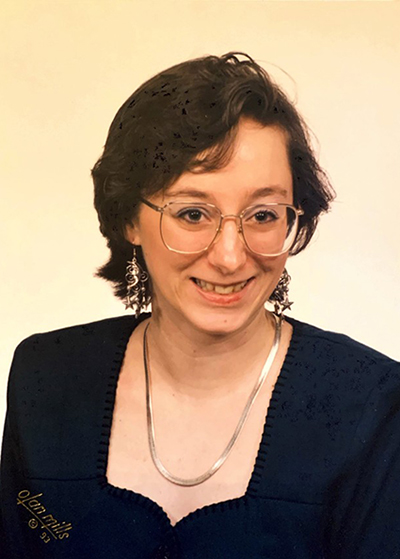
Thompson, 67, recalls her as a quiet but dedicated student who was never shy to ask questions.
“She was one of those people that did her work, and she kept her head down,” Thompson said. “It mattered to her. She gave her all to whatever she did.”
When the shooting occurred, Thompson was in Cascade Hall taking a water break during her class. Her decision not to get fresh air during the break spared her from seeing what a colleague saw. That faculty member was overtaken by panic upon re-entering the building, Thompson said, repeating the phrase “9-1-1, man, gun” over and over.
Thompson sheltered in place with her students, unsure of exactly what was happening. Nearly four years before the Columbine High School shooting, there were no active shooter lockdown procedures for faculty to follow, she said.
Eventually, an all-clear was given. Class resumed, and Heiner stopped to talk with Thompson, informing her that a female student was dead. Only when one of her students asked if she knew who the victim was, and then pointed to where DeVries had sat, did she realize who had died.
That evening, Heiner’s secretary and Thompson took flowers to the crime scene. While Thompson has lost other students to accidents and suicides, she said DeVries’ death was especially painful.
“It’s just seared in my mind, some of the things that I saw,” she said. “It never goes away.”
Whenever she passes through Cascade Hall today, DeVries is often on her mind.
“I can’t walk through there and not think of her,” Thompson said. “She was just a sweet young lady.”
Difficult times
Danielle DeVries doesn’t have many memories of her mother.
The 33-year-old Whatcom County resident was three months shy of her fourth birthday when the shooting happened, but she can still recall the feeling of her mother’s love.
Occasionally, DeVries said, she’d sneak out of bed at night and hide next to the couch while her mother watched television. Eventually, her mother would notice her, give her a hug and send her back to bed.
It’s a memory that shares space with unpleasant ones, of a parents’ marriage destroyed by a father’s bad decisions. Her father would use food money to buy drugs, DeVries said, and she recalls being told to drink water when she expressed being hungry.
“One of the things I’ve done as a parent, probably as a trauma response, is to always make sure there’s food in the house, because I don’t want my kids to feel like that,” she said.
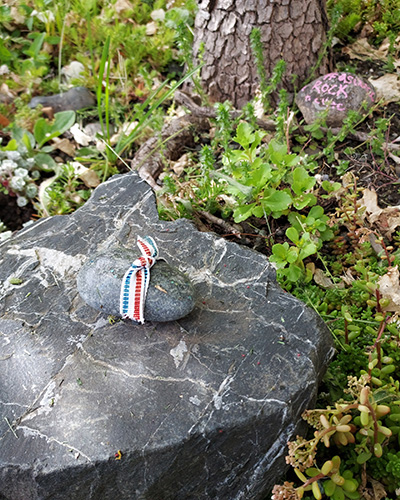
DeVries was born in Missouri, and the family spent the first several years of her life in Kansas. Domestic violence issues were present and, eventually, her mother called DeVries’ grandparents in Whatcom County; the family then moved to a house near their farm.
DeVries’ father followed them to the area seeking to repair things, but he could not shake his addiction to drugs such as methamphetamine. As Way’s father told a courtroom after the murder, a cousin had introduced him to drugs as a teenager, and his mother’s death from cancer in 1987 likely exacerbated his usage.
Furthermore, a cycle of generational abuse may have been present between Way, his father and his father’s father, DeVries said. Way found work as a forklift operator at Bellingham Cold Storage and was described in the Bellingham Herald as an intelligent and polite worker who also had anger issues. Days before the shooting, he was fired for failing to show up at work following a company sit-down.
DeVries’ mother had a court-mandated no-contact order against Way, but a piece of paper sometimes doesn’t stop a person who isn’t in their right mind, DeVries said. Shortly after being court-ordered to substance abuse treatment, her father became concerned about his continuing ability to see his children, she added.
If Way had escaped from campus after the shooting, Heiner wrote, he may have proceeded to his in-laws’ home to essentially kidnap his own children. Way initially went to the campus childcare center to search for his children before confronting his wife, and his car was later found to contain children’s clothing and other care items, Heiner added.
Despite the family’s concerns about Way, DeVries said he was still legally able to obtain the firearm used in the murder.
The aftermath
The homicide cast a shadow over the college’s subsequent commencement ceremony, as classmates set up a memorial of flowers and goodbyes at the spot Krystal DeVries died.
The following month, more than 100 people gathered to dedicate the Krystal Courtyard outside Cascade Hall. The area remains a peaceful one today, containing a small tree with a plaque beneath it, as well as a nearby memorial bench.
The men who stopped Way from escaping were honored as heroes after their courageous actions. In an August 1995 ceremony at Bellingham City Hall, the Bellingham Police Department and city officials cited all eight men — Heiner, Christopher; construction workers Russ Rogers, Ray Heinzen, Michael Dixon, Michael Montague and Eric Weston; and student Ed Kost — for bravery.
That October, Way pleaded guilty to first-degree murder and first-degree assault with a deadly weapon; the following month, he was sentenced to 60 years in prison by Whatcom County Superior Court Judge David Nichols — nearly double the 35 years hoped for by Way’s defense team.
In November 1997, the sentence was overturned by the Washington State Court of Appeals, and Way was re-sentenced within the state-specified standard range of 28 to 37 years. He remains in custody at Airway Heights Corrections Center.
Growing up
Danielle DeVries and her brother, Keegan, were subsequently raised by their maternal grandparents.
Although DeVries said she often felt embarrassed having to explain that she only had grandparents, her upbringing was otherwise great, she said. Growing up on a farm, DeVries helped raise livestock, which stoked an interest in veterinarian and animal science that she pursued in college.
DeVries graduated from Nooksack Valley High School, but before she did, she began taking Running Start classes. At the time, her only option for the program was through the same place where her mother died.
‘This courtyard is dedicated to the memory of
Krystal Dawn DeVries and to the belief that through
education each of us can contribute to the
eradication of domestic violence, to the enrichment
of life and to the fulfillment of individual dreams.’
— Krystal Courtyard memorial plaque
Although she visited the memorial courtyard during her time at WCC, DeVries said she didn’t dwell on it, having not taken the time to learn more specific details about the murder. After serving as student body president and graduating in 2010, DeVries spent a year at Washington State University before marrying her husband, who was stationed at the U.S. Army installation in Fort Riley, Kansas.
She completed her degree in agriculture and animal science at Kansas State University, before becoming pregnant and settling into motherhood during the COVID-19 pandemic. Next January, she intends to transition into human-focused medicine, beginning nursing classes at Bellingham Technical College.
As an adult, however, learning the full extent of her father’s crime provoked substantial anger toward him. But reading about the power of forgiveness in situations some might find unforgivable, DeVries wrote her father a letter. Although she forgave him, she told him she was uninterested in a relationship with him because of what he did.
Way wrote his daughter back. She still has the letter.
Commitment to safety
Despite the rareness of the horrific crime that took Krystal DeVries’ life, domestic and gun violence continue to be ever-present issues both on and off campuses across America. But since 1995, WCC has seen a significant enhancement of its protocols for dealing with potential on-campus violence.
In 2016, WCC officially formed a safety and security department. Led by Director Raquel “Rocky” Vernola, the department is responsible for providing training, resources and partnerships that may help prevent a crime like DeVries’ from occurring.
WCC abides by the federal Title 9-based Violence Against Women Act, and the college’s human resources office has a designated Title 9 coordinator trained in assessing and documenting potential domestic violence situations. In addition, WCC has adopted incident response protocols, which are explained in two-hour training sessions offered twice monthly, for college employees.
Those protocols include active shooter/active threat response plans, Vernola said, adding that she makes mention of the 1995 homicide in those trainings. The sessions are incorporated into required Washington State Department of Labor & Industries training integration for new employees, but are accessible to any employee, including during professional development periods. Vernola estimates that roughly 65% of WCC employees have taken the trainings.
The campus also has a bad behavior intervention team, which can conduct behavioral assessments of on-campus individuals in the face of a perceived or credible threat. If needed, the team will consult with local law enforcement, which unlike the college has access to firearm and criminal histories, Vernola said.
While WCC’s purview ends at the campus borders, Whatcom County offers a range of domestic violence and sexual assault services.
Vernola is also a commissioner for the Bellingham-Whatcom County Commission on Sexual and Domestic Violence, formed in 1999. The commission has up to 31 members from a range of community organizations and systems.
“One of the greatest improvements (in local domestic violence response) is collaboration and communication between the agencies and support services,” Vernola said.
One such agency, the Whatcom Dispute Resolution Center, can provide mediation for couples dealing with domestic violence, said executive director Moonwater. The WDRC also offers supervised visitation in partnership with local courts, ensuring that a parent seen as a potential safety issue can still visit their children.
Community services can help
In addition to WDRC, local sexual assault and domestic violence-related organizations include Brigid Collins, Lummi Victims of Crime and Domestic Violence and Sexual Assault Services.
Overall, the level of community awareness and conversation around such issues has evolved for the better, said Elizabeth Hart, DVSAS support program manager. This awareness includes a broader understanding of emotional abuse, coercion and manipulation, as well as a better ability to identify survivors and their abusers.
When petitioning for a domestic violence protection order in Washington, the petitioner can request the removal of firearms from the respondent, Hart added. If granted, it becomes illegal for that person to own a gun. Anyone convicted of certain domestic violence charges and felonies are also barred from gun ownership.
Some women feel compelled to take safety into their own hands. DeVries has a concealed carry permit and is trained in firearm use.
“I think if I hadn’t been a victim of gun violence, I never would have even considered such a thing,” she said. “But in the interest of not allowing myself to become a victim the way that (my mother) was, I choose to do that.”
Though domestic violence is complicated and ever-present, several of the people interviewed for this article expressed the notion that Krystal DeVries’ greatest legacy lies not in her death, but in having the courage to stand up to an abusive partner and attempt to move on.
“She’s an example of what so many women go through,” Thompson said, “to get out of such abusive, toxic relationships and provide a safe, good, secure life for their families.”
— By Matt Benoit