
Descendants of early Icelandic settlers keep their heritage alive in one of America’s most unique border towns.
Updated Nov. 13, 2025

Kristin Lomedico, a librarian at the Point Roberts Library, traces her family’s roots back to the early settlers and said the first Icelandic families arrived in the 1890s seeking work in the booming fishing industry.
“Canneries were just being built,” she said. “Word got around among Icelandic communities about jobs, and families came over and stayed.”
At the very edge of the western border between Canada and the United States, a sliver of land hangs like an overlooked corner of Whatcom County — geographically disconnected from the rest of the county, although sharing an international border with British Columbia. On this peaceful peninsula, a small community of Icelandic descendants keeps its heritage alive.
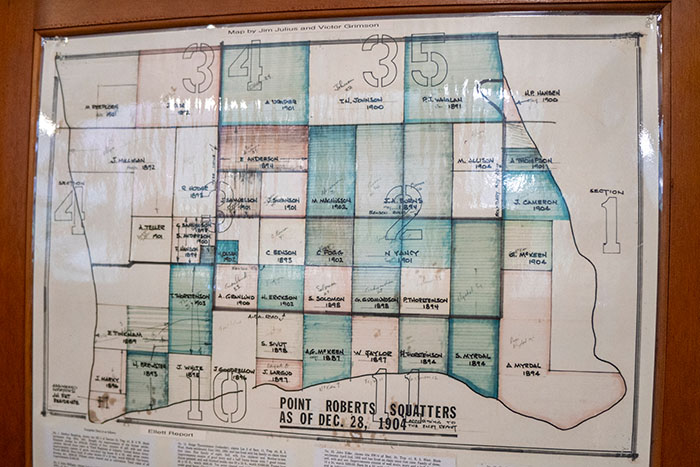
Early settlers initially squatted on land in Point Roberts, Lomedico said, on land that had been summer camps for several nearby tribes, and later a U.S. military reserve. By 1908 they were granted homestead rights, securing property for generations.
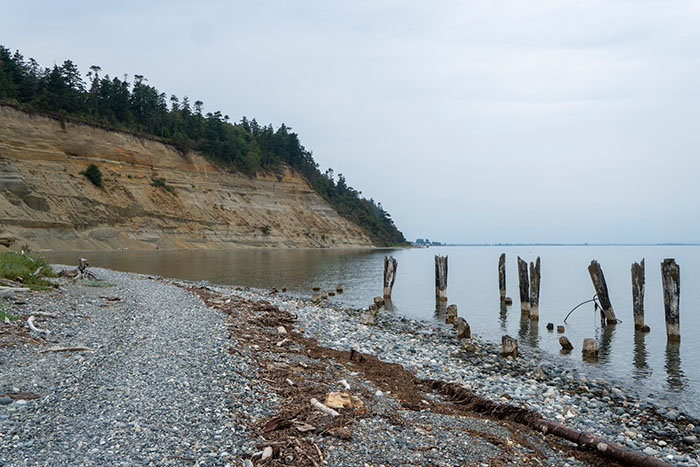
Along the Salish Sea, salmon canneries were opening in the 1890s, attracting Icelandic families seeking work and a fresh start. The combination of a growing industry and difficult conditions in the American Midwest drew many Icelandic settlers to the Pacific Northwest.
Hannah Shucard, whose grandparents were among the Icelandic settlers, said family traditions have persisted even as generations pass.
“My grandma spoke Icelandic,” said Shucard. “And we had some folk stories, like tales of the hill people who live in the rocks.”
Huldufolk, otherwise known as “hidden people,” are supernatural beings of Icelandic folklore believed to reside within large rocks and cliffsides. In Point Roberts, the peninsula’s rocky cliffsides and outcrops became natural homes for Huldufolk in the stories Icelandic settlers brought with them.
Traditional Icelandic recipes were also passed down.
“We would do Icelandic brown bread when I was a kid,” said Shucard. “My grandparents liked pickled herring and other foods from Scandinavia.”
Pauli DeHaan, who runs the Point Roberts Historical Society, said her father, who was born in Iceland, also passed down folk stories and recipes.
“There was a certain type of bread my grandfather would make,” she said. “He would stay home for a few hours during the day to watch it bake slowly in hot sand. It’s similar to how they still bake it in Iceland.”
Rúgbrauð, Iceland’s “hot-spring bread,” is traditionally baked in special wooden casks buried in sand next to a hot spring.
Early residents conducted church services and plays in Icelandic, preserving the culture and language at the center of the community, DeHaan noted.
“The church services were held in Icelandic right up until the 1940s,” said DeHaan. “There were also plays done in Icelandic, and even the people who didn’t speak the language would come for the entertainment.”
This local tradition parallels the broader patterns amongst Icelandic immigrant communities in North America.
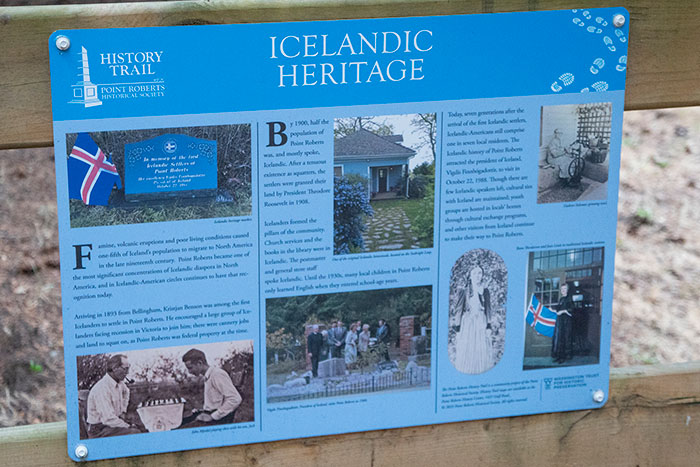
Poets and writers composed literary works in both Icelandic and English while adapting to life as early settlers along the Salish Sea. Although the number of Icelandic families in Point Roberts has steadily declined, the community remains tight-knit.
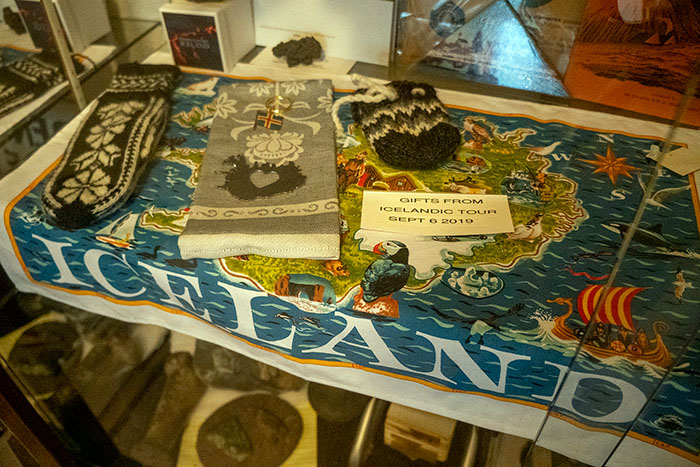
“We try to keep each other involved with anything Icelandic,” said DeHaan. “When visitors come from Iceland, we host them and show them around.”
Her family continues traditions that echo the immigrant experience, even if not all are specifically Icelandic, Shucard said.
“We still cut hay for our horses,” said Shucard. “A lot of our traditions come from the immigrant story of struggling and building a new life”
Shucard resides on a homestead, maintaining care of two Icelandic horses. Small yet sturdy, these horses are central to Icelandic culture, historically used for travel and farming, a tradition early settlers brought with them to North America.
The small community has worked to preserve its history through the Point Roberts Historical Society and other initiatives, DeHaan said.
“When Iceland’s first female president visited Vancouver in 1988, she wanted to come to Point Roberts and lay a wreath in memory of these Icelanders,” said DeHaan. “We hosted a morning tea, a reception and a tour of the cemetery.”
The Point Roberts Historical Society has archives, artifacts and a history trail with 29 signs throughout the peninsula pointing out landmarks that harken back to its Icelandic past, DeHaan added.
“We’re doing our best to make sure it is not forgotten,” said DeHaan.
Despite some fading traditions and the language slowly being lost over generations, Lomedico, Shucard and DeHaan emphasized the importance of preserving Icelandic heritage.
It’s always important to know the history of a place and its people,” said Lomedico. “For the settler history, this concentration of Icelandic families is unique, and keeping that part of the story alive matters.”
Ed.: Kristin Lomedico’s name has been corrected. Salish Current regrets the error in a previous version of this story.
— By Ronan Lynch
Also read in Salish Current:
• “Indigenous teachers help keep ancestors’ language alive,” Oct. 29, 2025
• “Students lead in celebrations of Hispanic heritage,” Oct. 27, 2025
• “Keeping Indigenous wisdom afloat,” Sept. 26, 2025
• “What’s the craic? Look inside the local Celtic music scene,” Sept. 12, 2025