
Food banks are navigating complex regional challenges while supporting low-income households impacted by delays and hits to SNAP benefits.

While all food banks across Whatcom, Skagit and San Juan counties will be impacted by recent delays and major cuts to the Supplemental Nutrition Assistance Program, or SNAP, each of them faces distinct challenges that make it difficult to serve their community. Local businesses and individuals are finding ways to support food banks and those who are suffering from the loss of this essential resource.
After around two weeks of delays and uncertainty, SNAP benefits, which offer low-income families a way to afford nutritious food, have officially been reinstated nationwide following the end of the federal government shutdown.
Although recipients in Washington are now able to utilize full SNAP benefits, the impact of these delays has already hit food banks, and it’s not over yet. And SNAP participants may be required to reapply for benefits under new regulations that could deny reinstatement to a million or more people.
Turning to food banks
Approximately 11.7% of residents in Skagit County, 10.1% in Whatcom County and 5.1% in San Juan County rely on SNAP benefits. Without them, many families who hadn’t previously relied on food banks are turning to them for support. However, many food banks have expressed concerns about increased reliance by those who already utilize their services.
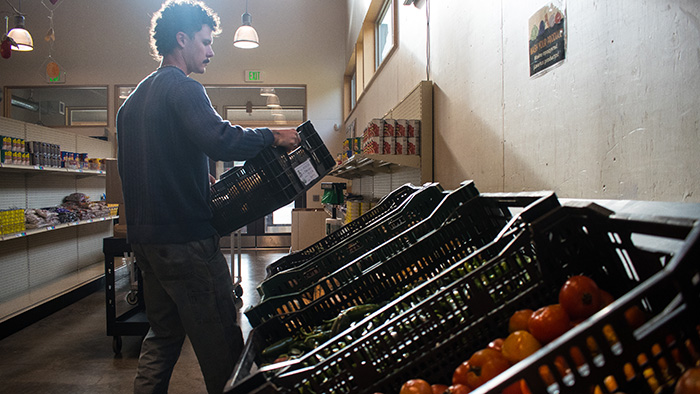
Henry Fisher, the executive director of the Foothills Food Bank in the Mount Baker/Foothills area, said that prior to the pause of SNAP benefits, the number of households visiting the Foothills Food Bank had been relatively stable throughout 2025, about 300–325 households each week. The last week of October, just before SNAP benefits were put on hold, that number jumped to 375, and then to 383 the first week of November.
Fisher said in an email that although that number dropped slightly after the shutdown ended, food banks still need support.
“Between the headlines, families are still choosing between groceries and medication,” he wrote. “Seniors on fixed incomes are still stretching every dollar. Parents are still worrying about school breaks when their kids lose access to free meals.”
To face the long-term increases and effects of SNAP cuts, the Ferndale Food Bank would need to increase its annual budget by 40%, or about $170,000, to meet the community’s rising need, according to executive director Sierra Crook. Asked if she felt they had the means to achieve that, she said, “Absolutely not.” That number does not include the need for more staff and better operational infrastructure that comes with that increase in need.
Crook said the food bank has seen a 35% increase in the number of households served per distribution, and that, based on numbers before the pause, an additional increase of at least 15–20% can be expected due to changes in SNAP policies.
The Lummi Food Bank had been consistently serving 100–120 households a week in October, but served 220 on Oct. 31 alone and over 330 on Nov. 3, according to David Misanes, assistant manager of Lummi Community Services. He said that the Washington State Department of Social and Health Services informed them that 1,270 Lummi community members would be affected by the SNAP delays.
Looking for funds
Fisher said that the Foothills Food Bank’s primary response to these delays is “scrounging funds” to double its food purchasing. In interviews, contacts at the Bellingham Food Bank, Ferndale Food Bank and Lummi Food Bank all reported plans to double their food purchasing budgets for November to meet immediate need as well.
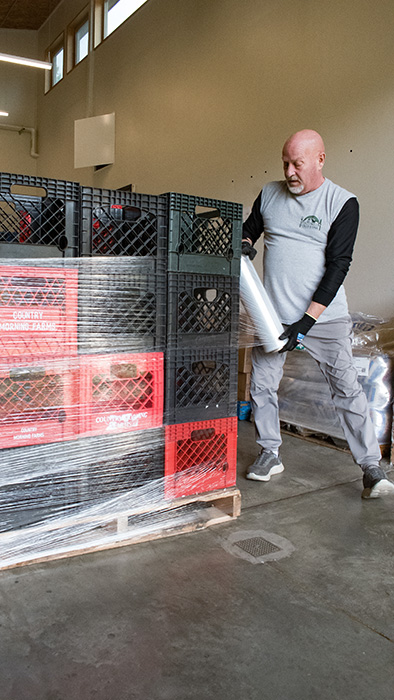
To help make these increases possible and prepare for the deficits they’ll incur, food banks are focusing on community outreach to garner support from local businesses and individuals.
With just weeks to plan, the Bellingham Food Bank is putting on “Bellingham’s Biggest Food Bank Bash Fundraiser of All Time.” On Nov. 22 at Stemma West, the free event will include live music by Veronica North, a silent auction, raffles, games and more. The goal is to raise $100,000 in one day.
In response to the SNAP delays, several Bellingham restaurants have offered free meals to those in need, no questions asked. Other local businesses have hosted food drives or fundraisers for the Bellingham Food Bank.
Fisher said that community outreach has proven to be a powerful tool. He noticed that a lot of people in the Foothills area keep up with local news through the Kendall and Maple Falls Facebook groups, and by posting about the SNAP delays there, the Foothills Food Bank was able to raise between $6,000 and $8,000 in just one week.
“The good news is, Skagit County residents are generous and stepping up,” said Elizabeth Jennings, director of community engagement at Community Action of Skagit County, in a press release. “While the community can’t make up the void in federal food resources, donors are making a difference.”
According to Community Action’s newsletter, community members donated over $44,000 to the Skagit Food Distribution Center, which supports more than 20 local food banks and meal programs across Skagit and San Juan counties.
Skagit Gleaners has also donated 36 pallets of apples and 26 pallets of other food to the distribution center, and the Skagit Valley Food Co-Op’s “Feeding Change” program, which offers customers the option of adding a donation to their total at checkout, has contributed $36,401 since September.
Varying impact
The Bellingham Food Bank is the busiest food bank in Washington, serving approximately 25% of Whatcom County, and its food purchasing budget was already the most aggressive in the state before it doubled from $75,000 to $150,000 for November. The challenges here are relatively straightforward — a large population, a large amount of need and a large amount of money necessary to meet it.
Food banks in smaller or more rural areas have smaller numbers, but their needs aren’t smaller — they’re different.
The Foothills Food Bank, for instance, is located in an area that is entirely unincorporated, meaning it has no city government to support it. In addition, its service area is approximately 600 square miles, according to Fisher.
Fisher said that a lot of residents are upward of an hour from a full-service grocery store and that many people rely on smaller stores, which tend to have less nutritious food options and higher prices.
One of the Foothills Food Bank’s long-term goals is to create satellite sites so people won’t have to travel so far, but in the current situation he is “looking to meet immediate need through existing programs.”
One of those programs is a home delivery service. On top of the transportation barriers, Fisher said that there is a substantially higher median age in East Whatcom County than in Whatcom County as a whole. This makes the need for home delivery service more important, since it mainly serves seniors and people with disabilities, as well as those who lack transportation.
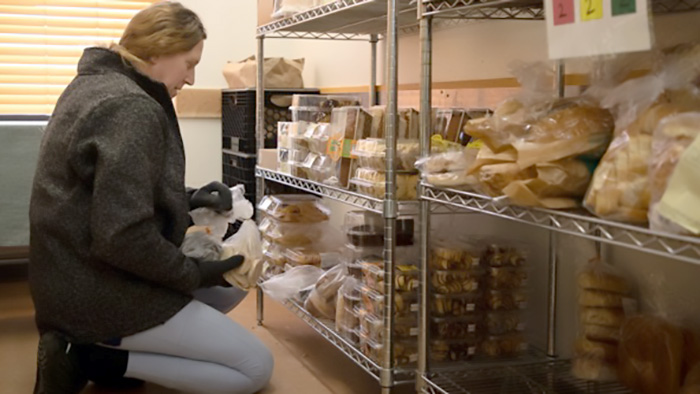
Misanes said that the Lummi Food Bank also offers a home delivery service, which currently delivers groceries to 63 residents who are elderly or disabled each week. Out of the approximately 100 households that were visiting the food bank regularly before the increase due to SNAP delays, he said that about 40-60 of them included elderly or disabled family members or children.
The Food Research and Action Center explains that the consequences of SNAP cuts are especially critical in rural areas, “where food insecurity, economic stagnation and limited access to services intersect to create deep vulnerability.”
Skagit County is no exception. In Skagit County, 36% of households fall below the ALICE, or Asset Limited, Income Constrained, Employed, threshold, according to data from 2023. This means they don’t make enough to meet their basic needs based on the cost of living in their area. However, that number is especially bad in East Skagit County, where 47% of families fall under the ALICE threshold.
ALICE reports also show that although the unemployment rate is low in Skagit County, a substantial portion of jobs are paid hourly. Hourly work can be less reliable and is less likely to offer benefits.
The San Juan County Community Food Assessment published in 2022 reported a series of complex challenges that make addressing food insecurity difficult. One was the expensive and complicated nature of importing and exporting goods between islands and to and from the mainland, which limits producers and increases costs for consumers.
To help mitigate these issues, San Juan County partners with numerous food resource centers and programs across the different islands. It also has its own, privately funded Fresh Bucks program, which incentivizes SNAP recipients to buy locally produced food.
— By Rebecca Sutch
Also read in Salish Current:
• “Food banks raise funds amid major program cuts,” Oct. 10, 2025
• “Food for thought: Indian grocers stir taste buds, serve community,” June 6, 2025
• “On the front line of food insecurity,” May 9, 2025
• “San Juan Island Farmers Market kicks off coupon program fundraiser,” March 6, 2025
• “At local food banks, accelerating need exceeds supply,” Nov. 22, 2024