
Bellingham’s Fourth Corner Punk Fest, a movement as much as music
Jesse Goodwin, founder and organizer of Fourth Corner Punk Fest, didn’t originally set out to create one of the Pacific Northwest’s largest punk gatherings. Frustrated by having to travel to Seattle or Vancouver to see many of the bands he loved, Goodwin wondered whether Bellingham could support something bigger.
It turns out it can. The Fourth Corner Punk Fest will have its largest lineup yet for the festival’s fourth consecutive year July 18-19. The festival introduces punk to audiences of all ages through two stages: the first one has touring, well-known bands, and the second features only local punk rock groups.
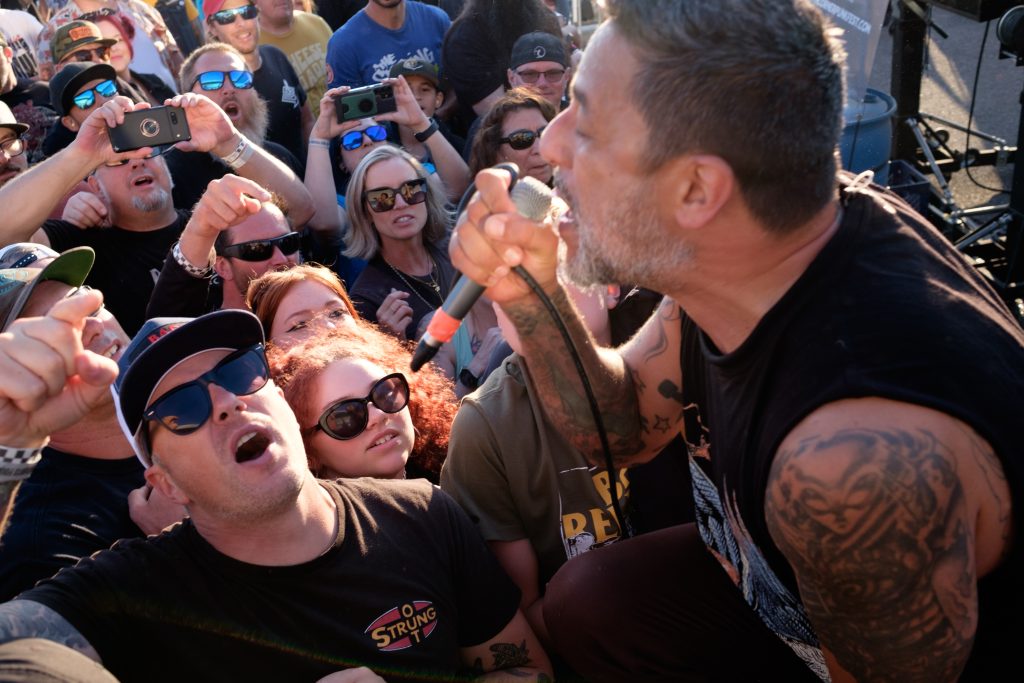
The festival started as a one-off event named “Punks and Pines” in 2022 at Schweinhaus Biergarten in downtown Bellingham, which sold out. Goodwin tested the waters the following year at the now-closed Time and Materials Taphouse, which attracted between 600 and 700 people. The turnout signaled that Bellingham’s punk community was ready for something bigger.
“I thought to myself, ‘OK, I might be able to do this for real,’” Goodwin said.
In 2025, Goodwin partnered with Bellingham bike shop Evil Bikes and held the festival in its parking lot in Fairhaven. Last year’s festival brought roughly 2,000 attendees and sold out before the gates opened.
Entering its fourth year, Fourth Corner Punk Fest will expand to two days with more space, additional water stations, shade tents and a second beer garden.
The additions reflect lessons learned from previous years, but Goodwin said growth has never been about packing in as many people as possible. Instead, Goodwin said the festival’s approach is rooted in the values that first drew him to punk: community, accessibility and making sure everyone leaves having had a good time.
“I don’t feel like there is a need to be greedy to sell more tickets and sacrifice everyone from having a good time,” Goodwin said. “If we hit this number, it is a success.”
That philosophy extends beyond the crowd size. Goodwin said ticket prices are set with affordability in mind, while bands, artists and vendors are compensated for their work. The festival also partners with local artists, nonprofits and harm reduction organizations, an effort he sees as consistent with punk’s long-standing emphasis on mutual support rather than exclusivity.
“To me, punk rock is not a uniform that you wear. It’s not this gatekeeping,” Goodwin said. “Punk rock is this community that is accepting of every gender, every style. It was a vehement middle finger to anyone who says it isn’t OK.”
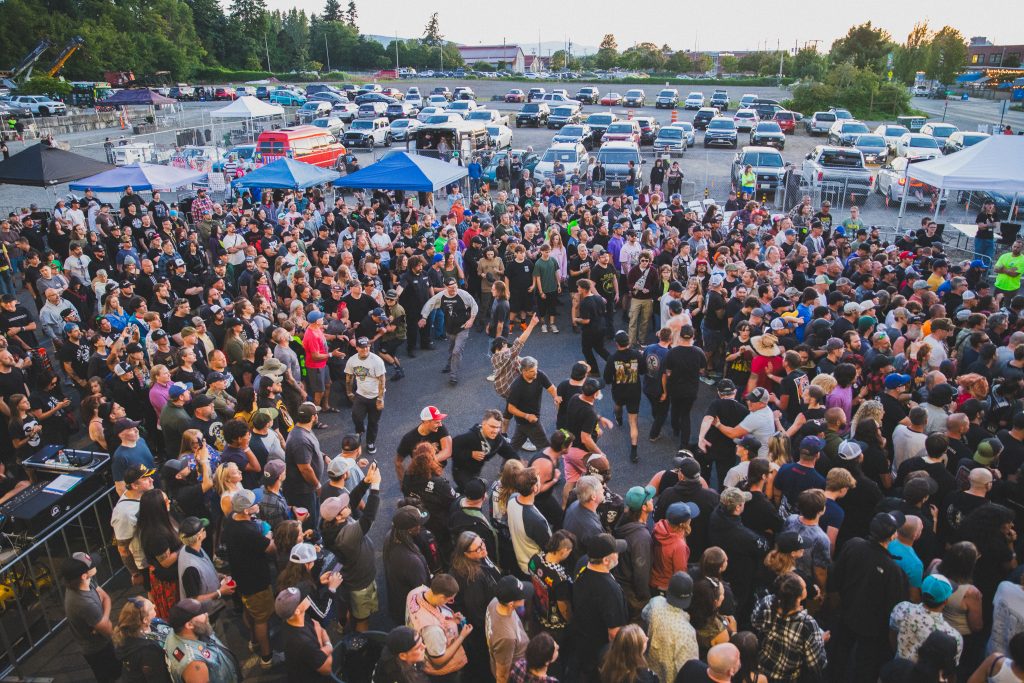
The festival’s community-minded approach extends beyond attendees. Over 100 volunteers help put on the event, while local artists, tattooers and vendors are given affordable opportunities to participate. Goodwin said supporting regional bands remains a priority, with a second stage dedicated entirely to Pacific Northwest acts.
Goodwin said creating a welcoming environment is central to the festival’s identity. Harm reduction organizations, nonprofits and local artists all have a place at the event, which maintains a zero-tolerance policy for hate speech and discrimination.
“It is important that it is known that this is a safe space,” Goodwin said.
Some of his favorite moments come not from the stage, but from hearing stories after the festival ends — parents carrying children on their shoulders, longtime fans reconnecting with old friends and newcomers discovering punk for the first time all remind him why the event exists.
“Hearing those stories,” Goodwin said. “That’s so special to me.”
Chris Adams, a Bellingham resident, attended Fourth Corner Punk Fest for the first time last year and plans to return for both days of this year’s festival. Though he came as a longtime punk fan, Adams said it was the atmosphere surrounding the music that left the biggest impression.
“The music was front and center, of course, but the vibes were the highlight,” Adams said. “Everyone was cool as hell. That goes for the attendees, the staff, the vendors and up to the bands themselves. Felt pretty special.”
Fourth Corner Punk Fest offered something beyond a weekend of loud guitars and circle pits for Adams. He described a crowd that stretched across generations, where teenagers in battle jackets stood alongside older fans dusting off shirts from decades past. Parents hoisted children onto their shoulders, seasoned moshers shared the pit with first-timers and newcomers.
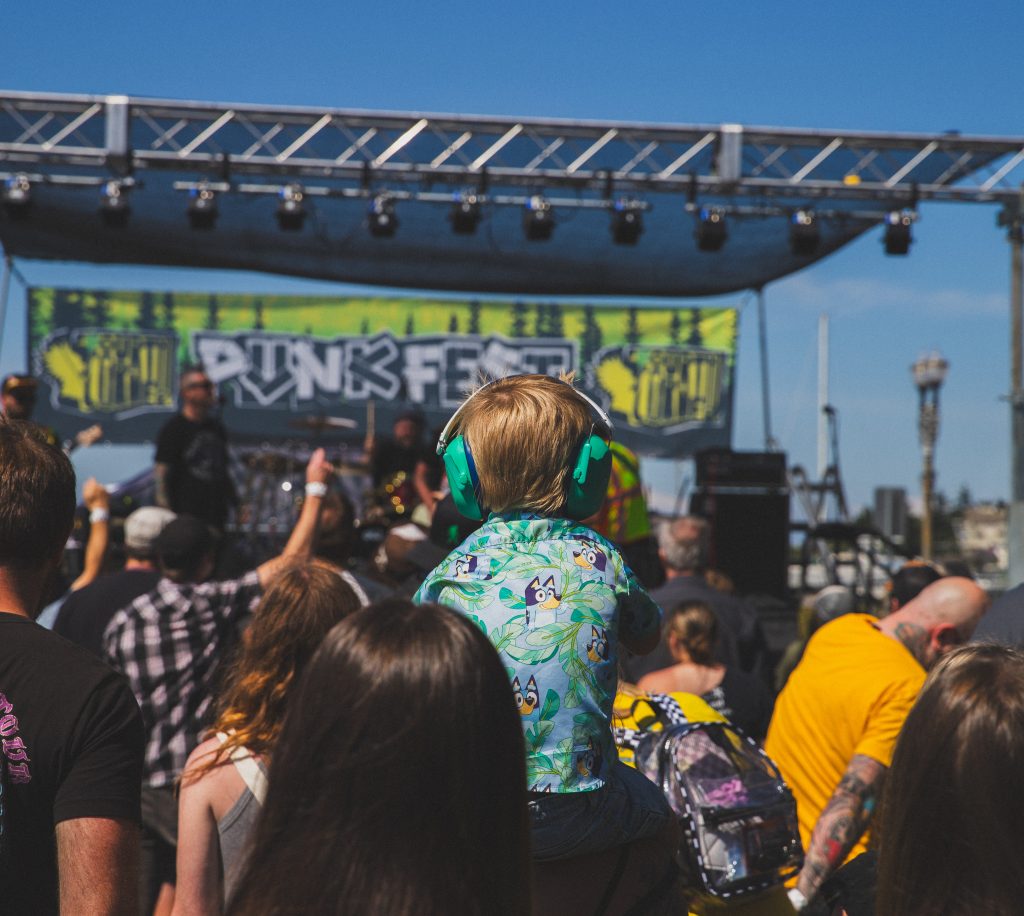
“Overall, you could feel the love and community,” Adams said. “It just felt like everyone wanted it to succeed.”
One moment that stood out to Adams came when a friend with little experience in punk music attended with his fiancée and younger sister. Before long, the younger woman had thrown herself into the pit.
“His sister hopped into the pit pretty early on and took to it like fish to water,” Adams said. “Her two-step was legit. It was freaking great.”
Adams said the festival reflected something larger than any one city. What made the event special, he said, was the punk community itself and its emphasis on support and connection.
“I’m late to the game, but for me it’s all about connection,” Adams said. “Being there for your neighbors to pick each other up, because that’s what we do when nobody else will.”
Long before Fourth Corner Punk Fest began drawing thousands of attendees, Bellingham’s punk and DIY community had already built the foundation that made events like it possible.
Nikko Van Wyck, executive director of Make.Shift Art Space, has been involved in the city’s music scene since 2008 and said the organization emerged directly from the needs and values of that early DIY ecosystem.
“It was born by the scene back then,” Van Wyck said. “Basically trying to create a sustainable way of making sure the support for those bands continues to live on.”
That idea of sustainability, he added, is rooted in punk ideology itself: mutual aid, self-determination and building infrastructure outside of commercial systems. In Bellingham, that meant prioritizing long-term support structures that keep artists active and connected rather than cycling in and out of the scene.
While Make.Shift is known for hosting concerts, Van Wyck said its role extends far beyond performance spaces. Affordable rehearsal rooms, mentorship and an intentionally accessible venue model have turned the organization into a key space for cultivating local culture.
“We’re really an incubator of whatever scene is happening in town,” Van Wyck said. “Sometimes it’s punk, sometimes it’s hardcore, sometimes it’s indie, sometimes it’s hip-hop.”
At the center of that ecosystem, he said, is a distinctly punk principle: that scenes only survive if bands actively invest in one another. That touring ethic, he said, is essential to keeping a scene from becoming insular. In his view, punk music is not only defined by sound or style, but by movement — bands leaving home, building relationships in other cities and returning with those connections intact.
“When you’re on the road, you need to be inviting people back to your hometown to play,” he said. “That is how you build not only a local community and scene, but a community and fan base around your band that will sustain your future artwork and artistic endeavors.”
That circulation of bands, he said, is what historically kept Bellingham on the map. In earlier eras, artists like Death Cab for Cutie and later regional acts helped “export” the city’s music identity outward, while simultaneously bringing touring bands back into local venues. Without that exchange, he argued, scenes risk becoming culturally stagnant.
“Bellingham culturally is not exporting its culture anymore,” Van Wyck said. “And it will again someday — it just means there are fewer bands actively doing that work of bringing others back.”
That emphasis on exchange reflects a broader punk ideology: that scenes are built through participation rather than consumption. The health of a DIY community is measured less by attendance numbers and more by whether artists are actively connecting cities together through touring networks, Van Wyck said.
Ultimately, Van Wyck said Bellingham’s punk identity has always depended on this balance between local support and outward movement. Even as the music industry shifts toward digital platforms and algorithm-driven discovery, he argues the core punk ethos remains unchanged: build community, leave home and then return with a new energy.
“Get in the car with your friends and play music in different towns,” he said. “There’s nothing more punk than that.”
—By Allie Van Parys