A new era for Downtown Bellingham was marked with a ceremony at Maritime Heritage Park
[Updated July 17, 2026]
Maritime Heritage Park was filled with the sound of drums on a recent afternoon as visitors danced through the rain, linked hand in hand, at the park’s center.
The ring of dancers, stepping together in a Native American Round Dance, consisted of both Indigenous and non-Indigenous participants. The dance was the culmination of a community introduction ceremony and a returning of the name of the park to the Lummi word Xw’otqwem — pronounced KWOT-kum — meaning “noisy water.”
The ceremony served as an invitation for the city to rename the park which, according to Bellingham communications director Melissa Morin, the city intends to do so. [Ed.: Previous version indicated the city had already accepted the name change]

The event may also be a harbinger of what some hope will be a new era for downtown Bellingham as one nonprofit works to build a 17,000 square-foot immersive storytelling and cultural experience center in the city’s Downtown Arts District.
Setting Sun Circle, an Indigenous-lead nonprofit, organized the event. The organization is set to open what it says is the city’s first Indigenous space downtown in April 2027.It has raised $14 million for its capital campaign and hopes to raise $6 million more.
“It will house all of our stories, but also we’re opening it up to the broader community,” said Santana Rabang, a Lummi Nation member, Setting Sun Circle researcher and podcast producer. “I hope it just creates allyship…there is a percentage of Whatcom County that is very curious and wants to learn more but doesn’t have accessible knowledge or accessible resources that are readily available. I think that this space is going to be able to do that for them.”
The first of those stories to be told in the space will be “Homeland,” which Content & Relations Director Natasha Brennan said is “a placemaking story focused on the ancestral lands of Lummi Nation and highlighting the true history and peoples that have been here since Time Immemorial.”
The space will feature a variety of uses: a kitchen with programming around local and regional foodways; a healing garden; podcast and creative studios; retail space; a contemporary art gallery; speakers; and performers.
Future visitors will also be greeted with a 50-foot, 180-degree immersive video screen that will feature both past films by Setting Sun Circle as well as drone footage and other depictions of Coast Salish homelands and culture.
“All of it is meant to just really immerse the audience into our way of life.” Rabang said. “I hope it just really opens their hearts and minds that there is a history to this place.”
Setting Sun Circle plans to offer free trips for schools, while the gallery and healing garden will also be open to the public free of charge. Other areas of the space as well as its events, programs and more will be available through tickets or memberships.
Setting Sun Circle, which recently rebranded from Children of the Setting Sun, has told Coast Salish stories through documentaries, the Young & Indigenous Podcast and more. The downtown space will host a production space to continue those efforts but will also serve as a physical home for “Indigenous innovation, healing and collective action,” according to the organization’s website.
Tearing down to rediscover
Construction of Setting Sun Circle’s new Holly Street home will be a complete makeover of the century-old building that formerly housed Mindport Exhibits. The nonprofit is working with local contractor Dawson Construction to transform what is essentially three separate lots into one cohesive space, including a dome-shaped skylight.
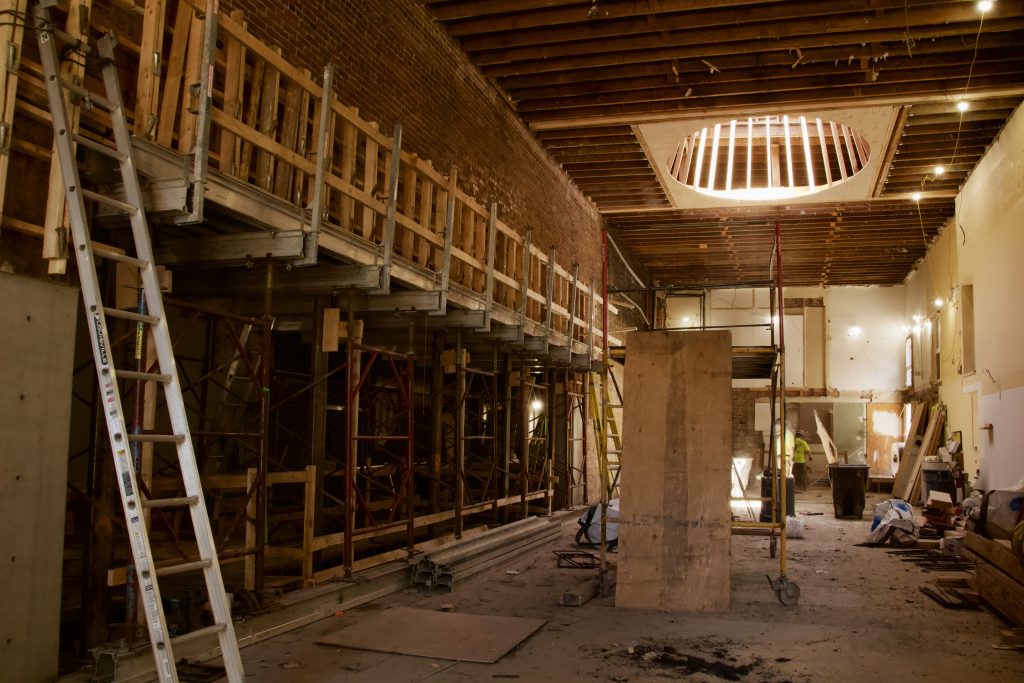
At one point, once the flooring had been ripped up, Setting Sun Circle COO daniseten Michael Vendiola had a moment of clarity as he looked down at the actual ground underneath the building peeking through.
“That’s when we started thinking about the serious work we’re into, the return to our ancestral homelands, seeing the spaces where our ancestors walked, the actual ground that was uncovered there,” said Vendiola, an enrolled tribal member in the Swinomish Indian Tribal Community with Lummi and Visayan ancestry.
“We’re really trying to take this work seriously, and our elders, our spiritual guides, have been telling us to not only do this work but do it carefully — so that’s what our intention is at this time,” he continued.
Future generations
Growing up on the Lummi Nation, Rabang said coming into Bellingham always felt like entering foreign territory.
Those experiences shaped how she initially thought of Setting Sun Circle’s new home — as a fruition of the Land Back movement, a global push to return to Indigenous stewardship over public land. Rabang recalls conversation with the nonprofit’s executive director and former Lummi Nation Chairman Darrell Hillaire.
“He challenged me back and said, ‘I don’t think it’s Land Back; I think it’s just us coming home,’ and so that sat with me,” Rabang said. “Coming to town has always felt pretty foreign to me, like we’re leaving our home to come to a different space, but now it doesn’t feel like that anymore. It really does feel like we are coming home.”
The space will be more than just a chance for visitors to learn about the history of the area; it will also be a place for future generations to thrive and grow. Programming at Setting Sun Circle’s future home will include an artist in residence program as well as school field trips and curriculum resources for educators.
For Squalicum High School student Aolani Bumtay, 17, it’s an exciting prospect. She serves as the school’s Native American Student Union vice president.
“Our student union likes to show people our culture, especially in high school, because not a lot of people know about the Indigenous culture,” she said, adding that the downtown space will help change that. “It means more people can see it, more audiences to learn about.”
Lummi Nation Chairman Anthony Hillaire held his young son’s hand as he spoke on the tribe’s vision during the naming ceremony.
“It is the cities, it is the counties, it is the state of Washington that reside within the original territory of all of our people here,” he said. “Our intentions are to bring that forward and ensure that not only our children at Lummi but all children that call this place home will grow up knowing a little bit more about each other, understand each other a little bit more, so that when decisions are made, we are thinking about the next generation and we are thinking about protecting this place that is so beautiful to us.”
—By Sydnee Chapman