
Three films showing at the Pickford Film Center provide multigenerational history as well as entertainment.
Throughout June, the Pickford Film Center is hosting Drag Me to the Movies, a film series curated by staff to honor drag’s enduring legacy in cinema and culture. The screenings are part of the theater’s broader Pride Month programming and coincide with Bellingham’s network of queer-led community events.
The three selected films serve as both entertainment and historical record for multiple generations. “Paris is Burning” documents the lives of Black and Latino drag performers in 1980s New York. In the 1996 comedy, “The Birdcage,” middle-aged couple Albert and Armand Goldman navigate family expectations and identity. In “Torch Song Trilogy,” adapted from three plays by Harvey Fierstein, Arnold Beckoff, a Jewish drag performer in 1970s New York, searches for love and belonging while confronting loss and rejection.
From ballroom to Bellingham
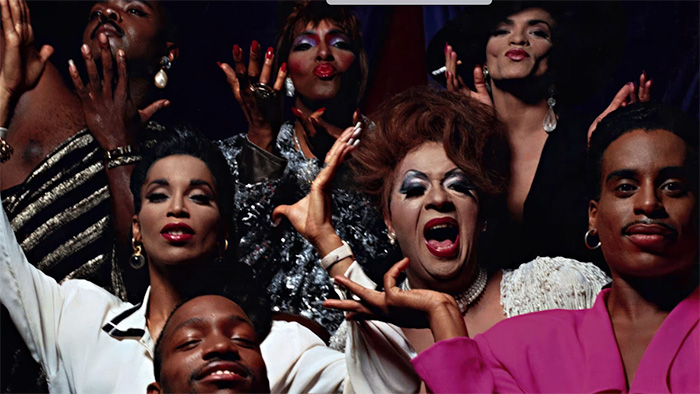
Director Jennie Livingston documents Black and Latino queer and trans communities creating space through drag balls in “Paris Is Burning.” New York’s drag balls were part runway show, part performance arena where competitors served looks and attitude for trophies, bragging rights and the joy of becoming someone entirely new for a night.
“The film not only has representation but has positive and joyful representation,” said EJ Colen, senior instructor in humanities and social sciences at Western Washington University. “It highlighted the brilliance and resilience of people who were not only marginalized within mainstream culture but often marginalized within LGBTQ+ spaces.”
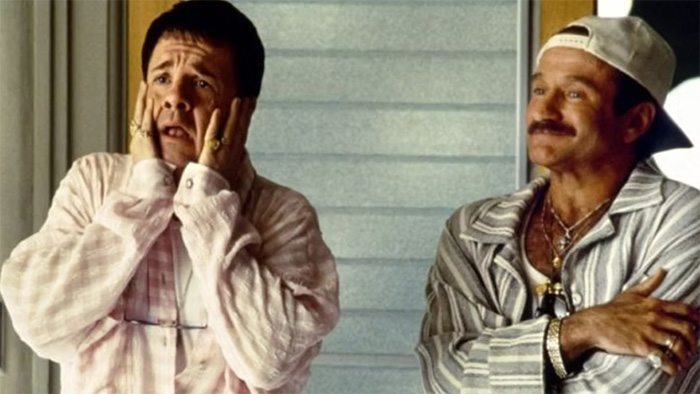
In “The Birdcage,” Robin Williams and Nathan Lane portray a gay couple navigating conservative in-laws by masquerading as a “normal” family. The film challenged 1990s norms by centering queer love and visibility in a widely accessible comedy.
Together, these films reflect generational shifts in queer cinema — one born from necessity, the other from a moment of cultural opening. As Colen puts it, finding “Paris is Burning” as a young queer person in the late ’90s, “was a vital education in learning where Madonna’s ‘Vogue’ came from (which came out in 1990 also). I wish that at the time Madonna had done more to make that connection for the young queer audience. That would have been vital to 14-year-old me as I tried to figure out my own place in the world.”
Colen sees “Paris Is Burning” as essential in the classroom for how it opens students’ eyes to the realities of queer life, especially for people of color. It sparks meaningful conversations about power, identity and who gets to tell whose story: “I think all of the key themes of the film are still urgent today.”
Drag’s role in Bellingham’s queer history
For Bellingham, where drag has been performed in public for over a century, the screenings offer a platform to connect past and present, theater and protest, community and art. Together, they frame a broader conversation about how local performers, historians and activists are sustaining and reimagining queer traditions.
Michelle Harmeier, founder and board president of the Bellingham Queer Collective, believes this year’s events speak to both the history and urgency of queer celebration in public spaces.
“Drag is a critical form of self-expression as well as entertainment,” they said. “Drag allows social and political commentary; it allows people to challenge and explore gender norms, while creating visibility and acceptance for the LGBTQ+ community. Bellingham has a vibrant drag scene, dating back to the late 1800s.”
That long legacy comes into sharper focus through the work of Kolby LaBree, owner and operator of Bellinghistory Tours with the Good Time Girls. LaBree leads historical walking tours around Bellingham that highlight lesser-known stories, including those of the city’s queer past.
“I was born in Bellingham and love this place and love learning about its history and sharing those stories,” LaBree said. “I have always identified as a ‘queerdo,’ as a person who never quite fit into any categories, so queer history is of personal importance to me. I also have a performance background and have always enjoyed dressing up and gender clowning, if you will.”
LaBree described how drag and gender expression onstage were once accepted forms of entertainment, even as those same expressions were criminalized in daily life.
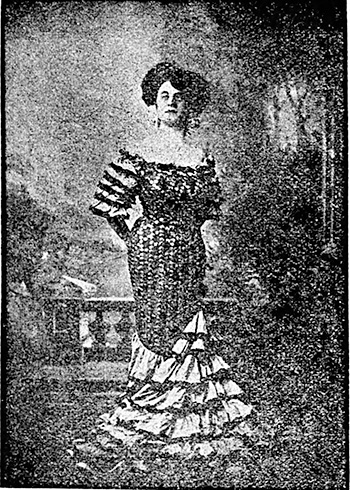
“‘Female impersonators’ were a very popular act and there were a surprising number of them touring around the country,” she said. “One of our early theaters employed an impersonator called Joseph Noel … So I consider Joseph Noel to be our first drag queen.”
LaBree noted that while drag thrived in vaudeville circuits of the late 19th century, the formation of Bellingham brought with it municipal codes criminalizing cross-dressing under statutes aimed at “public morals and decency.”
“Basically, then you have some sparse, dark years until the Civil Rights Movement and Stonewall,” she said.
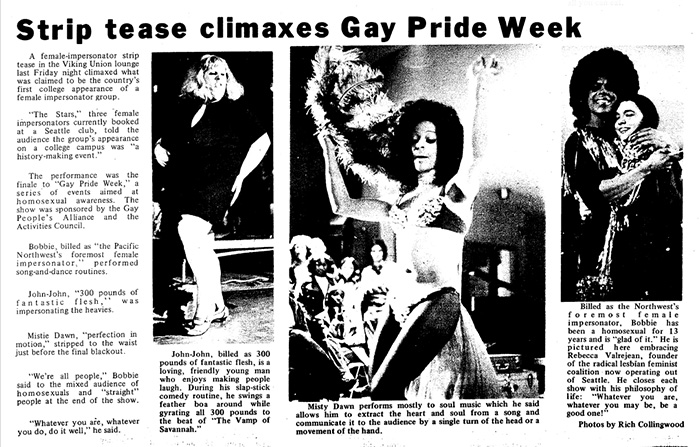
The return of drag to the public eye in Bellingham, according to LaBree, was spurred by early queer organizing at Western Washington State College in the early 1970s. Figures such as Rebecca Valrejean, who created the one-woman show “The Lavender Troubadour,” were central to this effort.
Since then, drag in Bellingham has grown in visibility, thanks in large part to local performer and advocate Betty Desire, founder of the beloved The Betty Pages, who has been performing in the region for over three decades.
Desire traced the roots of her own introduction to drag through the Imperial Court System, which was founded in the 1960s as a form of organized queer philanthropy through performance. The Imperial Court is named for its royal-inspired structure to build queer community through pageantry, titles and charity, blending camp and activism in a mock monarchy for a cause. But, Desire noted, today’s younger performers are more likely influenced by modern pop culture.
“Western Washington University has a vibrant drag club,” Desire said. “They bring with them new energy and a different perspective in how they present in their performances.”
“Today’s generation has been more influenced by ‘RuPaul’s Drag Race,’ a reality TV show. Less restrictive than presenting as an empress or emperor,” she said. “I’ve also seen some fusion of drag and mid-‘60s burlesque. It’s fascinating to watch the craft evolve, as it has since the days when only men were allowed on stage.”
And for those stepping into drag today, she offers simple advice: “Continue exploring and expanding. Continue learning from each other. Share with your fellow performers so we can advance the joy of communicating through drag performance together.”
For Harmeier, the combination of arts, performance and civic engagement continues to serve as the core of Bellingham’s Pride season. Drag is a small element of a larger picture for the queer community this June.
“Pride is not just a parade and celebration; it’s a form of activism and protest against historically unfair treatment of a marginalized group of citizens in our community,” they said. “Right now our transgender community… is being directly attacked by our own federal government and we need support and protections from our broader local community.”
Without community action and community efforts, Harmeier said, “We will see more homelessness, mental health crisis, joblessness and food insecurity due to a lack of healthcare support and growing sentiments of hate.”
Bellingham’s Pride season extends into July and August. Through events at the Pickford, performances downtown and collaborations with groups like the Bellingham Queer Collective and the Imperial Sovereign Court of the Evergreen Empire, the city’s queer community continues to affirm its presence and resilience.
LaBree sees this visibility as both empowering and essential.
“For younger people to be able to see examples of (drag) is huge,” she said. “To see others performing or dressing in ways that resonate with them is a way to feel less alone and to feel a part of something bigger.”
— By Mickey Mann
Also read in Salish Current:
• “Nonprofit cinema to open second location this summer,” May 27, 2025
• “A legacy of adaptation and evolution at 207 Prospect Street,” March 5, 2025
• “Bellingham Exit returns: music, art and immersive experiences await,” Oct. 3,2024
• “Review: Queer documentary ‘Break the Game’ to play at the Pickford,” Aug. 9, 2024