
Whatcom Chorale’s November concert themes reflect the group’s mission: Anchored in the Classics, Focused on the Future.

When Rand Jack — founder of Western Washington University’s Center for Law, Diversity and Justice — learned that the Whatcom Chorale’s November concert will be music based on the World War II mass Japanese internment, his mind jumped to his friend Lorraine Bannai, who worked as a young lawyer to help expose the injustices and government misconduct of the Japanese incarceration on one of the most infamous cases in U.S. Supreme Court history.
As an attorney, Bannai succeeded in vacating the wartime convictions of Fred Korematsu, Gordon Hirabayashi and Minoi Yasui who resisted incarceration orders at the Manzanar relocation center in the Owens Valley of California.
The concerts, with the theme of “Lest We Forget,” are at 5 p.m. Nov. 22 and 3 p.m. Nov. 23 at Christ the Servant Lutheran Church, 2600 Lakeway Drive.
Following each performance, Bannai will speak about the experience of the many who endured this wrongful imprisonment. Their stories serve as a reminder that safeguarding civil liberties requires vigilance and courage in every generation, Bannai said.
She is a third-generation Japanese-American, whose parents, grandparents, aunts and uncles were incarcerated at Manzanar.
“Adding a talk by (Bannai) to the Whatcom Chorale’s two November concerts seemed like a wonderful opportunity to blend artistry and politics, to add a dimension to the concerts that would enhance the singing and help make it relevant to the world we live in today,” Jack said.
After the concert, Bannai will outline how the legal team exposed government misconduct and demonstrate how fear and prejudice can override constitutional protections.
“Our case and ultimate success were based on proof from the government’s own records that it suppressed, altered and destroyed material evidence while arguing its case before the Supreme Court,” she said.
The concerts reprise the Chorale’s performance from 2019 of the premiere of Sarah Mattox’s “Heart Mountain Suite.” Deb Brown, artistic director of Whatcom Chorale, said she was intentionally aware of the increasing parallels in current events with the historical events explored in “Heart Mountain Suite.”
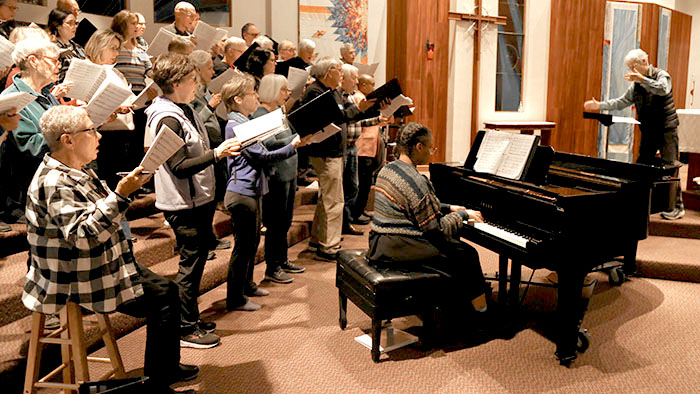
“Heart Mountain Suite” is a shortened adaptation of Mattox’s chamber opera, “Heart Mountain,” which was originally written for the Yakima Valley Museum for their program of “Stories in Music.”
As Mattox was uncovering the background of the exhibits in Yakima, she came across notes that read “From the journal of Kara Kondo.” Curious about Kondo, a survivor of the World War II internment camp Heart Mountain in Wyoming, she was put in touch with her daughter, Elaine Kondo McEwan, who sent Mattox more information about her mother.
Through words from Kara Kondo’s diaries, the Chorale will “give voice to the unbroken spirit of more than 120,000 Japanese-Americans unjustly rounded up and incarcerated during World War II,” said Bellingham musician and activist Marie Eaton.
Singing the role of mature Kara Kondo is Metropolitan Opera Guild mezzo soprano Kimberly Sogioka, whose grandfather was incarcerated at Heart Mountain.
Brown said Mattox has added an important scene to the performance, in which a young officer, played by Whatcom Chorale soloist Mark Davies, expresses his dismay at being forced to follow orders which contradict his sense of fairness.
Christmas song complement
When Brown asked Bellingham composer Scott Henderson if he had any ideas of companion pieces that might augment the program, he said that he had arranged a set of Japanese Christmas songs in 2015 for the Bellingham Symphony Orchestra and the Bellingham Children’s Choir. That year, he had found a booklet of “Five Christmas Songs from Japan” in a Bellingham thrift store.
The carols were composed by Robert Graham just after World War II while he was serving as assistant to the chaplain of the U.S. Army occupation forces in Japan, teaching music and English to Japanese children at the Rikkyo Jogakuin Mission School in Tokyo.
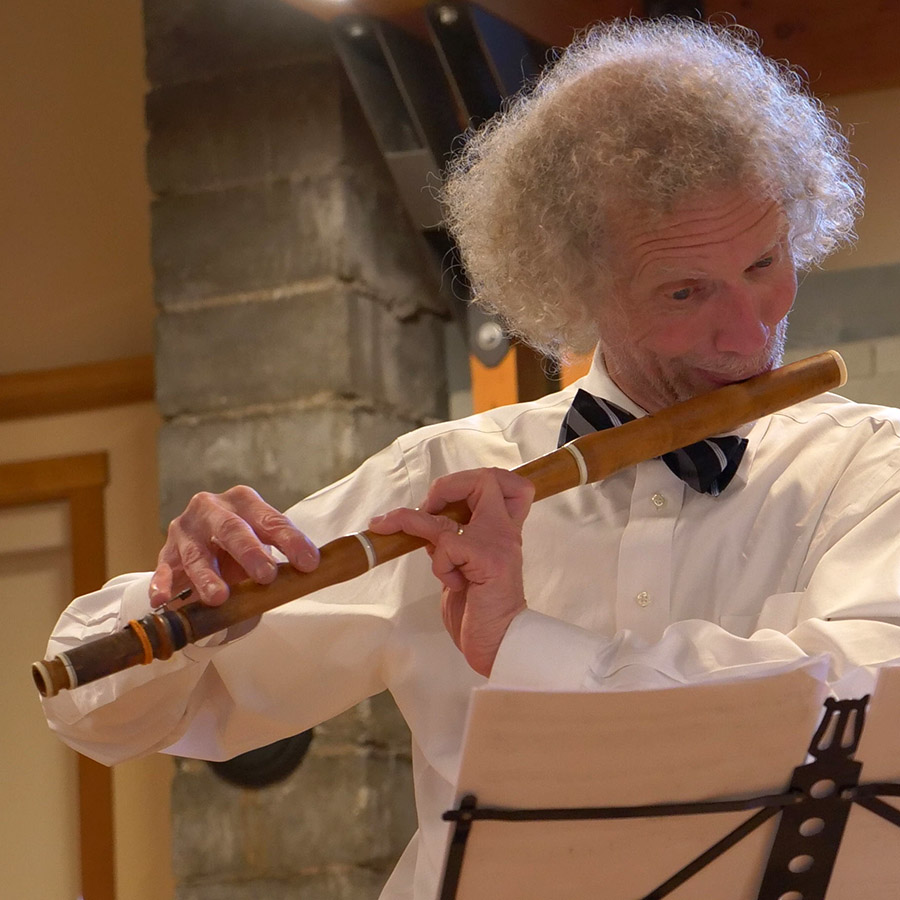
Graham wrote the songs to poems that were written in English by his students with melodies inspired by Japanese folk music. Henderson suggested to Brown that he rearrange the songs for full choir and a reduced orchestration of piano, two flutes, violin and percussion to fit with Mattox’s orchestration.
Henderson will conduct this portion of the program.
The November program also includes Stephen Sondheim’s “No One Is Alone” the concluding anthem for his 1986 musical “Into the Woods,” arranged by Henderson.
He said the concluding lyrics, “Hard to see the light now, just don’t let it go. Things will come out right now. We can make it so,” acknowledge how tough it is to see the good and positives in the world, like we are in a constant struggle in the dark.
This fits perfectly with Whatcom Chorale’s mission for all their concerts: Anchored in the Classics, Focused on the Future.
“That is when we must acknowledge our dependence on each other, which can move us toward the light,” said Henderson. “These are words of hope.”
— By Margaret Bikman
Also read in Salish Current:
• “Commentary: Remembering history as a path to healing, reconciliation,” Oct. 20, 2025
• “What’s the craic? Look inside the local Celtic music scene,” Sept. 12, 2025
• “Native American Heritage Month offers time to examine lingering issues,” Oct. 25, 2024
• “Recognizing folk in the Salish Sea: Lopez Uncovered Music Festival,” July 29, 2025
• “Old is new again with early music festival,” May 13, 2022