City of Bellingham works to bolster Padden Creek habitat
Drier, hotter summers are prompting new ideas for how to balance recreation and wildlife in the Padden Creek watershed.
The City of Bellingham is working on a water budget that investigates the feasibility and impacts of using more water from Lake Padden to boost streamflows in the creek, Jason Porter, public works surface water manager, wrote in an email. The water study is set to be completed in November.
Padden Creek is home to chum, coho and Chinook salmon; steelhead and cutthroat trout.
Salmon need consistent water quantity and excellent water quality to thrive, said Wendy Scherrer, a leader for school-based Salmon in the Classroom Programs in 21 Bellingham schools and former director of the Nooksack Salmon Enhancement Association.
“We need to balance both recreation values and ecosystem values in our Bellingham lakes and creeks,” Scherrer said.
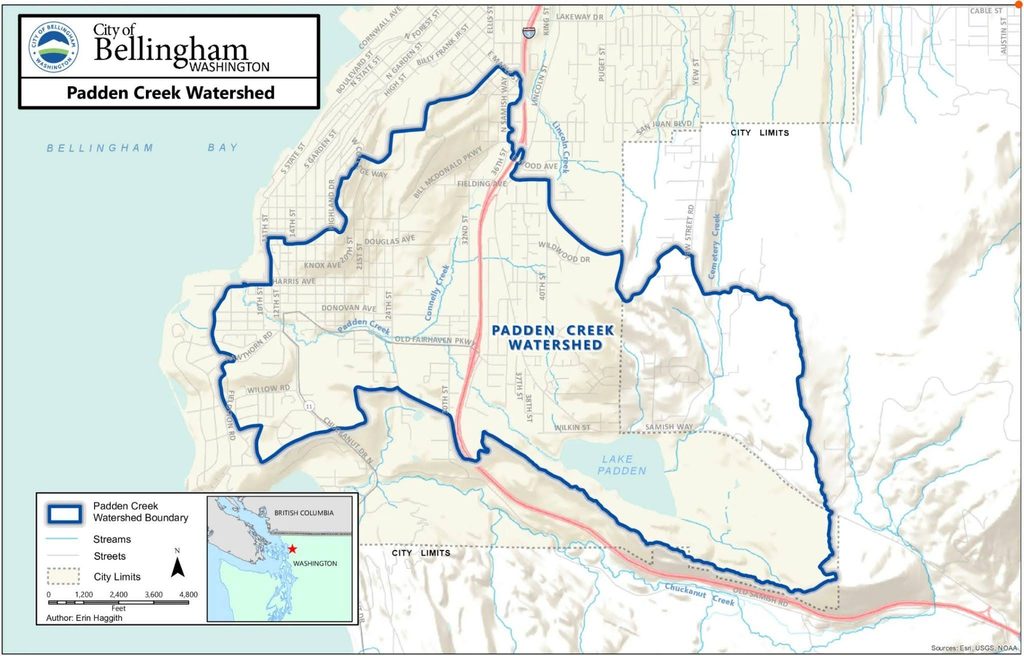
Since early July, the creek has barely been a trickle, even after its confluence with Connelly Creek in the Happy Valley neighborhood. Connelly Creek is a major tributary of Padden Creek.
Water quantity
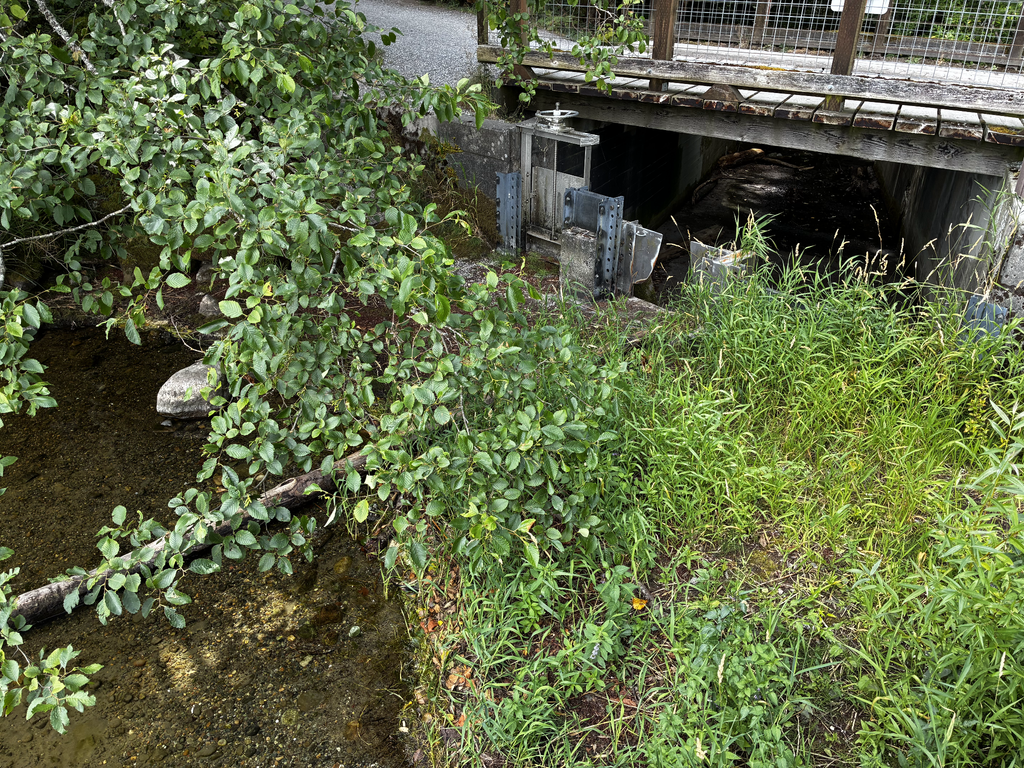
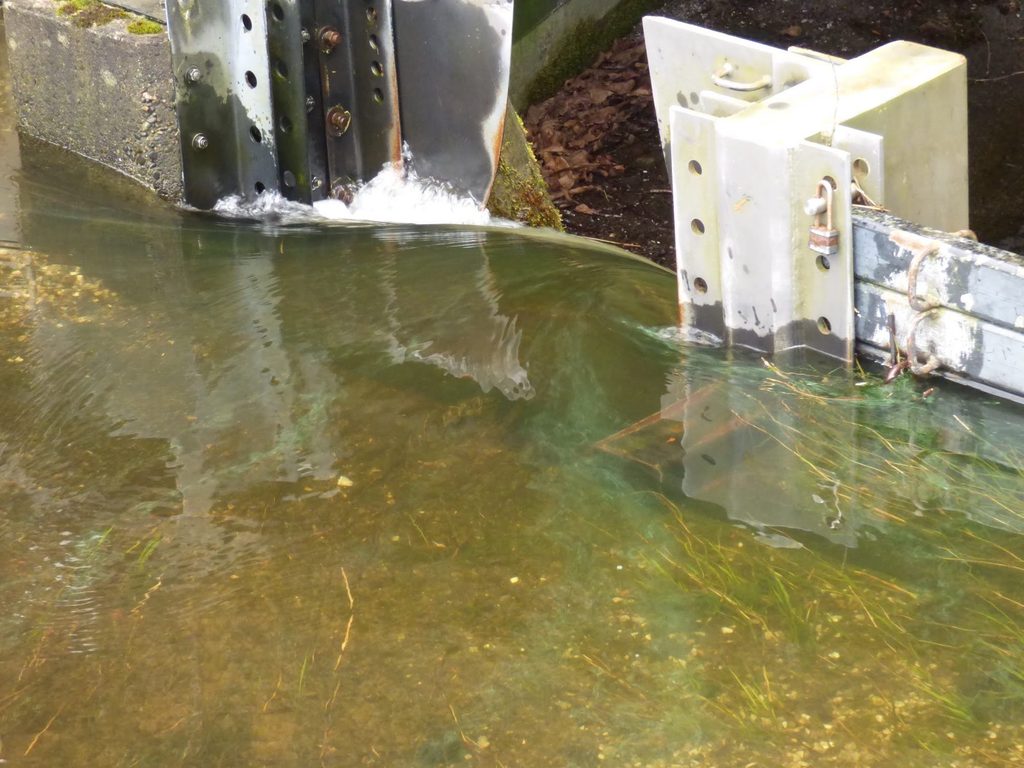
Outflow from Lake Padden is controlled by a concrete dam at its northwest edge.
The dam is left over from a time when South Bellingham used the lake as a reservoir for drinking water from the early 1900s to 1968, according to Scherrer.
During the wetter late fall, winter and spring months, the lake spills over the dam and water flow in the creek is higher than the rest of the year, according to data from the City of Bellingham Lab.
In early to mid summer, the lake typically stops spilling over into the creek, according to Analiese Burns, public works habitat and restoration manager.
This has been happening for as long as Scherrer can remember. Padden Creek was the first creek she stepped into when she came to Bellingham to study environmental planning at Western Washington University in 1973, she said. Lake Padden Park opened the year before.
However, several key things have changed since the early 1970s.
Bellingham summer precipitation totals have been going down about 8% per decade since the 1960s, according to Karin Bumbaco, deputy state climatologist at the Washington State Climate Office.
So far this year, Bellingham’s summertime precipitation has been in the normal range, but parts of Western Washington have been in a drought for the last four years and that causes soils to rapidly absorb water before it runs off, Bumbaco said.
Overall temperatures throughout the year have risen between 1.5 degrees to 4 degrees Fahrenheit since the late 1890s in the Pacific Northwest, depending on location. Higher air temperatures can increase the temperature of water in streams, which can have a negative impact on salmon especially if streamflows are lower, Bumbaco said.
Scherrer remembered dead salmon fry floating on the surface of Padden Creek about 15 years ago downstream of Interstate 5, near the site of a major tunnel removal which daylighted the creek in 2015.
Sections of Padden Creek often become very shallow in the summer, isolating fish and aquatic organisms in shallow pools with warming water. Salmon and trout need water temperatures to be between 50 and 65 degrees Fahrenheit, as it holds more dissolved oxygen crucial for their survival, Scherrer said.
The area that is now Happy Valley Neighborhood had extensive wetlands prior to European settlement and development, Burns wrote in an email. Those wetlands helped contribute water to the Padden Creek system throughout the summer. Even then, parts of the creek may have gone dry during the summer season.
According to the Wild Salmon Center, some species of salmon need the creeks for more than just spawning depending on the type. Coho stay in their nursery creeks for up to a year after hatching and both Chinook salmon and steelhead trout can stay in their nursery creeks for up to three years before swimming out to the ocean.
Chum salmon only stay in their nursery creek for up to several months after hatching.
The Salmon in the Classroom Programs that use Padden Creek and other city creeks for salmon releases have gradually switched from coho to chum salmon fry and their shorter residence time in streams as fry may be part of the reason, said Scherrer. This transition started less than 20 years ago.
Scherrer has noticed that Padden Creek does not have enough water in it for returning adult salmon when other creeks such as Chuckanut, Whatcom and Squalicum creeks already have salmon swimming up them.
“If we need to pump some water out of Padden Lake into Padden Creek (in September) so there is enough water by October to November when the fish are returning to spawn, that seems like a pretty good tradeoff to me,’’ she said. “Right now there is not a plan in place for managing water quantity in Padden Creek, particularly during the time when the adult fish are coming in to spawn.’’
The city’s water budget will help to identify the effects of more water withdrawals on the health of Lake Padden, Porter said in an email.
Water use from Lake Padden
According to the Draft Water Management Plan, Bellingham has water rights to 750 acre feet of water from the lake per year. One acre foot is nearly 136,000 gallons.
Currently, the only water withdrawals from the lake are for the 18-hole Lake Padden Golf Course, Steven Janiszewski, Bellingham’s park operations manager, wrote in an email.
This municipal golf course, started in 1971, is a short distance from the northeast corner of Lake Padden. About 38,000 to 40,000 rounds of golf are played there each year based on the last five years, said Michael Fosnick, director of operations at Troon Golf which manages the golf course with the city.
Water use for irrigating the golf course is around 69 acre feet per year since 2015, according to David Stout, Troon’s vice president of science and agronomy.
That is less than 10% of the city’s water right.
Troon Golf representatives said they did not know how water allocations to the creek for salmon might affect operations.
“We have asked Troon to take measures every year to conserve irrigation water by ensuring all pumping equipment is operating efficiently and we are only watering areas utilized by golfers,” Janiszewski said.
Some of those water conservation measures are 21 satellite irrigation controllers and more efficient irrigation heads, he said. Satellite irrigation controllers help with water recycling and avoid overwatering some areas while underwatering others by monitoring plant health.
In 2024, the golf course installed a state-of-the-art weather station, he said.
“The number one factor in saving water is weather,” Stout said. “We get cloud cover, we get rain, we’re not going to irrigate. If it’s incredibly windy and we get 15 hours of sunlight, we will irrigate based on what the plant’s evapotranspiration usage is.”
Evapotranspiration is a calculation of a plant’s daily water needs based on the plant’s metabolic rate, solar radiation, wind and temperature, he said.
Moisture sensors are in the works for the near future, Janiszewski said. Moisture sensors reduce irrigation needs, creating and monitoring an electromagnetic field that detects how much water is in the soil and can even indicate soil health.
Water quality
Water quality can be affected by a number of factors, but locally, stormwater is a major priority.
To help the grass grow, Troon uses fertilizers on their golf course, mainly lime, which Troon selected based on low calcium levels in the soil.
Runoff from the golf course is monitored two times a year at the inflow and outflow of the golf course property. Troon has been doing this monitoring after they established a baseline in a more intensive study done in 2023, according to Brianne Kenny, Troon’s environmental science manager.
So far, the monitoring has not shown concerning levels of phosphorus or nitrogen.
“Ideally, we’d like it to get a little better, but so far nothing drastic either way,” he said.
Golf courses tend to be frugal with fertilizers because overfertilizing can harm the turf and it is labor intensive and expensive, Stout said.
RE Sources, which conducts monthly water quality tests in Lake Padden along its edges and at its deepest point, have found high phosphate and nitrate levels, particularly on the upper portion of Padden Creek that serves as an inlet for the lake, according to program coordinator Zoe Fry.
These excess nutrients could be caused by runoff from neighborhoods above the lake, dogs, geese and decaying plant matter, she said, and could be contributing to algal blooms in the lake that usually occur between November and February.
Bellingham is currently investigating sources of the excess nutrients and ways to mitigate them, according to Stephanie Cilinceon, public work’s communications coordinator.
How treatment of waterways have improved
When Scherrer was in college in the ‘70s, cows could still walk in the Nooksack River and its tributaries out in the county.
“It was like an open sewer,” she said.
Padden Creek was still in a tunnel. Its tributary, Connelly Creek, did not have protected land around it, she said.
Today, Padden Creek is passable for salmon all the way up to I-5 and perhaps beyond, and habitats like its surrounding riparian areas and the Connelly Creek Nature Area have been restored and protected.
Critical areas such as wetlands and areas around streams are now protected in Whatcom County.
Water quality in the Nooksack River is showing improvement, according to a blog post last year by the Washington State Department of Ecology.
“Now people are more educated,” Scherrer said. “They’re willing to value and fund projects to support healthy ecosystems in Bellingham. As a grandmother of six, I feel that we need to work together even harder to expedite the best management practices in our city creeks.”
—By Jacob O’Donnell